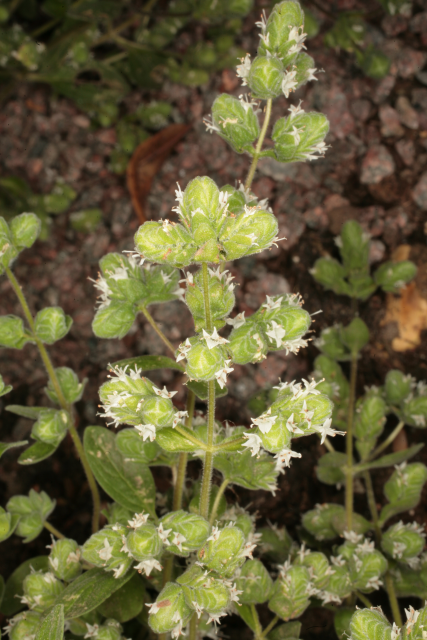
 Back to List
Culpeper: ‘Origanum. Organy: a kind of wild marjoram, ... helps the bitings of venomous beasts, such as have taken Opium, hemlock or poppy; provokes urine, brings down the terms, helps old coughs; in ointments it helps scabs and itch.’
Culpeper, Nicholas. (1650). A Physical Directory . London, Peter Cole.
Notes: It is a culinary herb, but is still widely used as a general tonic in modern herbalism. To quote Plants for a Future: ‘The herb is antiseptic, antispasmodic, carminative, cholagogue, diaphoretic, diuretic, emmenagogue, expectorant, stimulant, stomachic and mildly tonic ...(used) internally in the treatment of bronchial complaints, tension headaches, insomnia, anxiety, minor digestive upsets and painful menstruation.’
Plants for a Future (2017) at www.plantsforafuture.org.uk. http://www.pfaf.org/user/Plant.aspx?LatinName=Origanum+majorana
Leaves used for culinary purposes; flavouring for salad dressings, vegetables, oils and tea. The aromatic seeds are used as a flavouring in sweets and drinks.
Plants for a Future (2017) at www.plantsforafuture.org.uk. http://www.pfaf.org/user/Plant.aspx?LatinName=Origanum+majorana
Asia-Temperate, Western Asia, Cyprus
Asia-Temperate, Western Asia, Turkey