
 Back to List
Nepeta- Latin name for an aromatic plant, includes the genus catnip (Nepeta cataria)
Stearn, W.T. (1996). Dictionary of Plant Names for Gardeners. Cassell. p.254
racemosa- with flowers in racemes
Stearn, W.T. (1996). Dictionary of Plant Names for Gardeners. Cassell. p.281
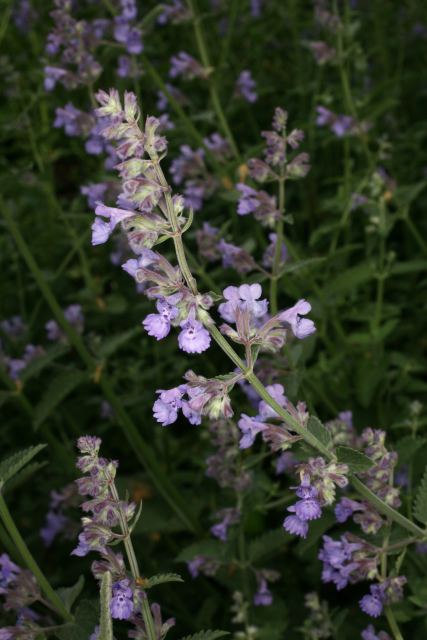
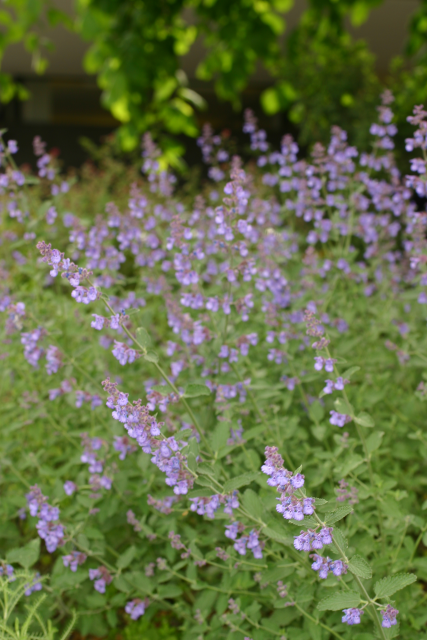
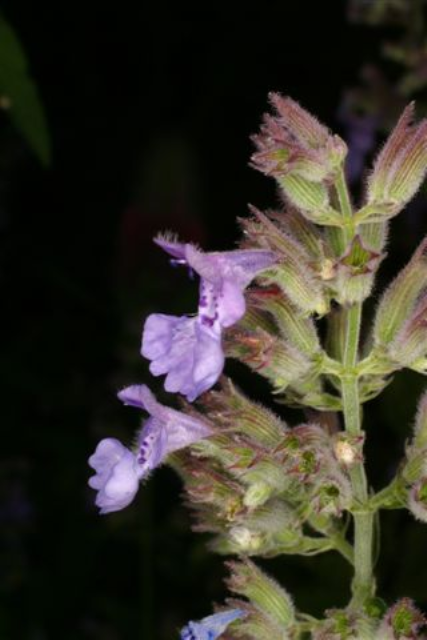
A spreading to upright perennial with ovate, scalloped, finely hairy, aromatic, mid-green leaves, 1-3cm long, with heart-shaped bases. In summer, it produces raceme like, whorled cymes of deep violet, to lilac blue flowers. 1-2cm long, 60cm high by 50cm wide.
Brickell, C. (2003). A-Z Encyclopedia of Garden Plants. Dorling Kindersley. p.721
To propagate, take softwood cuttings in summer or lift and divide large clumps in spring, replanting divided specimens with lots of well-rotted organic matter. If powdery mildew becomes a problem them prune out the affected areas and treat the remaining plant with a fungicide. Thrips may be a problem.
Some people drink catmint tea from the leaves to help with sleeping problems and anxiety. This herb often proves irresistible to cats. It's mildly hallucinogenic to them. It's also said to be hated by rats. Chewing the root is reputed to make humans aggressive, and one old British story recalled that a reluctant hangman used it to give him the courage to carry out his duties.
Bird, R, Houdret, J. (2000). Kitchen and Herb Gardener. Lorenz. p.419
Nepeta lowers fever, increases perspiration and is a mild sedative. Historically, it's been taken as an infusion for feverish colds, influenza, nervous tension, anxiety and gastric upsets. Used externally, it has been applied to cuts and bruises. Catmint poultices have been applied directly to the skin for arthritis, haemorrhoids and on a compress to relieve swelling.
Bird, R, Houdret, J. (2000). Kitchen and Herb Gardener. Lorenz. p.419
.JPG)