 Back to List
Traditional Herbal Medicine Registration (THMR).
A natural antiseptic, used for treating stings, burns, wounds and skin infections. An essential oil obtained from the leaves and twigs is strongly antiseptic, diaphoretic and expectorant. It stimulates the immune system and is effective against a broad range of bacterial and fungal infections.
Plants for a Future at www.plantsforafuture.org.uk http://www.pfaf.org/USER/Plant.aspx?LatinName=Melaleuca+alternifolia
Notes by Henry Oakeley from Lindley's 'Flora Medica' (1838): Lindley notes that Melaleuca cajputi is the source of Cajuputi, an ‘essential oil used in toothache and rheumatic affections, and as an internal remedy in hysteria, epilepsy, flatulent colic, and cholera.’
Lindley, John. (1838). Flora Medica, Longman, Orme, Brown, Green & Longmans
Cajputi, an essential oil is obtained from the leaves.
Melaleuca cajuputi (not grown at the College as it comes from Bengal and not frost-hardy) was first described by Dr Richard Powell (1767-1834), editor of the 1809 Pharmacopoeia of the Royal College of Physicians of London, a testimony to the long-standing connection of the College with botany. Richard Powell would have known of the use of Cajputi oil from this plant as he was secretary to the Commissioners for the Investigation of Madhouses as it was used for epilepsy and hysteria.
Note from Henry Oakeley 2019
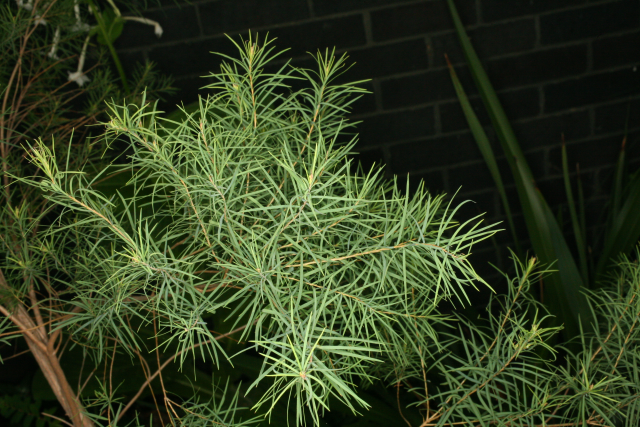
Called 'Tea tree' as it is one of he sources of 'Tea tree oil' produced by the steam distillation of the needle-like leaves. ‘Tea tree oil’ has antifungal actions and is used in shampoos against dandruff. Note: there are numerous trees called ‘Tea tree’ and ‘Ti tree’, including Camellia sinensis which is the source of tea, the beverage: its pressed seeds produce the ‘tea oil’ used in cooking.
Note from Henry Oakeley 2019 http://en.wikipedia.org/wiki/Tea_tree_oil