
 Back to List
Traditional Herbal Medicine Registration (THR).
Prospan Cough Syrup. A traditional herbal medicinal product used to relieve chesty coughs associated with the common cold based on traditional use only.
MHRA website https://mhraproducts4853.blob.core.windows.net/docs/9fedadb9a5d4d67ce404dfd7b02212fce4108a3e
The EMA/HMPC monograph on Hedera helix.
EMA website https://www.ema.europa.eu/en/documents/herbal-monograph/final-european-union-herbal-monograph-hedera-helix-l-folium-revision-2_en.pdf
Side effects/precautions: Hypersensitivity; caution with antitussives (codeine/dextromethorphan), gastritis/gastric ulcer; do not use if pregnant/breast feeding; may cause allergic reactions, gastrointestinal reactions. From Patient information leaflet re Traditional Herbal Medicines in the UK (UK Medicines and Healthcare Products Regulatory Agency (MHRA)).
Medicines and Health Care Regulatory Authority, 2013 Licensed Traditional Herbal Remedies
Toxicity due to saponins.
Professor Anthony Dayan, 2021
Moderately toxic if ingested. Can be allergenic
Professor Anthony Dayan, 2022
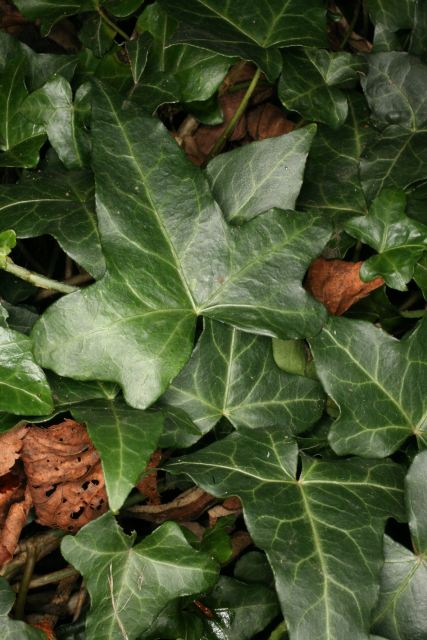
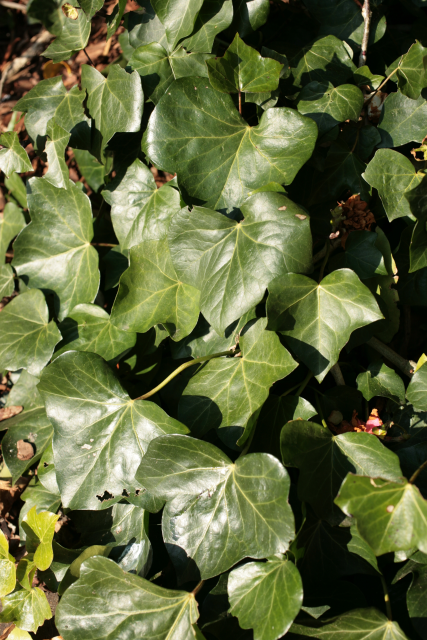
Experimental and chemical investigations revealed that common ivy (Hedera helix susp. helix) contains 3 compounds which are powerful irritants and moderate sensitizers.
Pubmed website https://pubmed.ncbi.nlm.nih.gov/3652685/
According to Culpeper’s Complete Herbal, those who have drunk excessive amounts of wine may be promptly cured of their symptoms by drinking a decoction of ivy leaves, boiled in yet more wine.
Culpeper, Nicholas. (1981). Culpeper's Complete Herbal & English Physician, Pitman Press Ltd. Faximile of 1826 Edition ed p81
Notes by Henry Oakeley from Lindley's 'Flora Medica' (1838): Common ivy is not one’s first choice as an edible plant, but Lindley described it as being employed to prevent drunkenness and to ‘dissipate the effects of wine’ and being an emetic. One suspects that one might not be well enough to get drunk after eating it, but perhaps inducing vomiting removed residual alcohol from the stomach. His hangover cure was noted by Culpeper in 1649 but given boiled in alcohol, ie ‘the hair of the dog’ remedy. We grow it in the beds outside 8, St. Andrew’s Place. Ivy was also used as a ‘sudorific’ – to make people sweat – for sweating was seen as beneficial, as it heralded the reduction of a fever.
Lindley, John. (1838). Flora Medica, Longman, Orme, Brown, Green & Longmans
Europe, Southwestern Europe, Portugal
Europe, Southwestern Europe, Spain
Europe, Southeastern Europe, Yugoslavia
Europe, Southeastern Europe, Romania
Europe, Southwestern Europe, France
Europe, Southwestern Europe, Portugal
Europe, Southwestern Europe, Spain
Europe, Eastern Europe, Belarus
Europe, Eastern Europe, Baltic States
Europe, Southeastern Europe, Albania
Europe, Southeastern Europe, Bulgaria
Europe, Southeastern Europe, Greece
Europe, Southeastern Europe, Italy
Europe, Middle Europe, Austria
Europe, Middle Europe, Belgium
Europe, Middle Europe, Netherlands
Europe, Middle Europe, Germany
Europe, Middle Europe, Poland
Europe, Middle Europe, Switzerland
Europe, Northern Europe, Denmark
Europe, Northern Europe, Norway
Europe, Northern Europe, Ireland
Europe, Northern Europe, Great Britain
Europe, Northern Europe, Sweden
Europe, Middle Europe, Czech Republic
Asia-Temperate, Western Asia, Cyprus
Asia-Temperate, Western Asia, Turkey
Europe, Eastern Europe, Central European Russia
.JPG)