 Back to List
No notes about this in Culpeper for 1653, or in the Pharmacopoeia Londinensis, but in his Complete Herbal and English Physician (1826) he notes it as a Celandine, good against the plague, and for curing jaundice and scurvy, among many other properties.
Culpeper, Nicholas. (1826). Complete Herbal & English Physician, Magna Books. Facsimile 1826 ed.
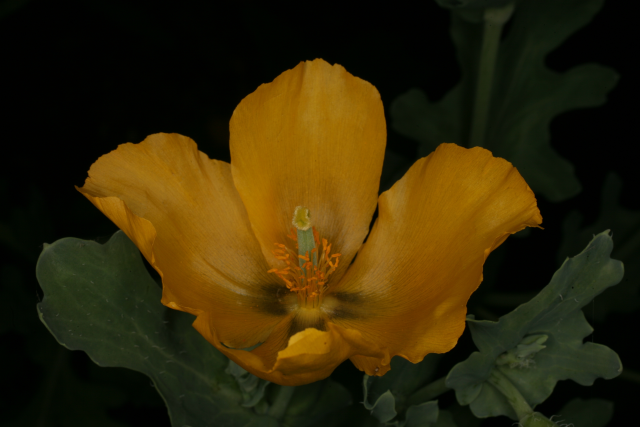
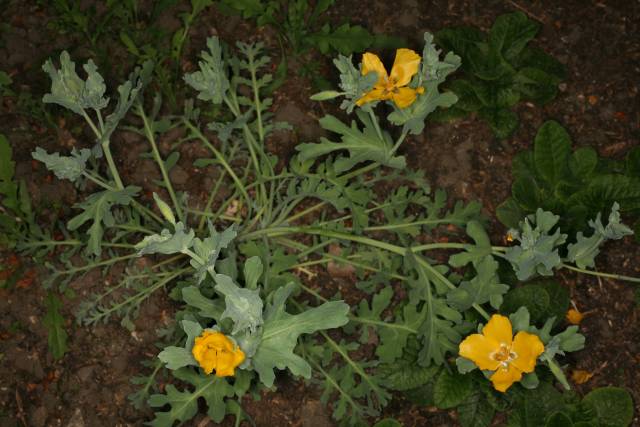
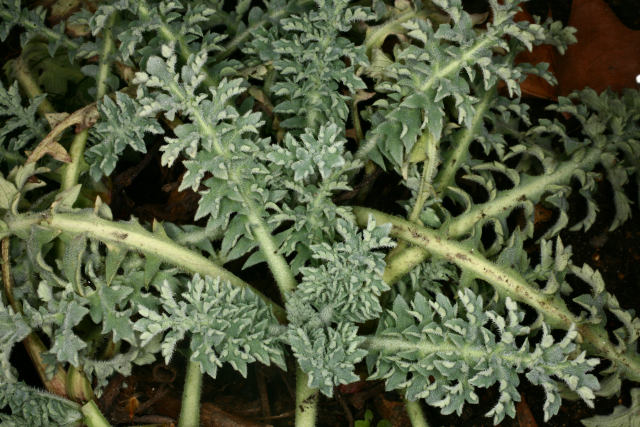
Glaucium flavum Crantz Papaveraceae Yellow horned poppy. Distribution: North Africa, Western Asia to Europe. Contains glaucine which is toxic but in small doses may be bronchodilator. As Papaver corniculatum luteum it was known to Parkinson (1640) who reports it as bitter, so advises taking it in honey, as a purgative and analgesic; also for cleaning ulcers.
Oakeley, Dr. Henry F. (2013). Wellcome Library notes. Link
Yellow horned poppy. Identifying the plants used two thousand years ago is often difficult as few illustrations have come down to us. The oral tradition sufficed until the invention of printing and the massive use of woodcuts in the herbals of Fuchs, Dodoens, Lobel and others from the 16th century onwards. Names used by the ancient herbalists were perpetuated by Linnaeus when he introduced the binomial system of plant names in 1753, for it was called Glaucium by Dioscorides in the fi rst century AD. Lyte calls it Papaver corniculatum, Fuchs uses Mekone ceratite (‘mekone’ being Greek for poppy), but the earlier name has been perpetuated.
Oakeley, Dr. Henry. (2011). A Year in the Medicinal Garden of the Royal College of Physicians, revised edition. Royal College of Physicians, London. p.91 Link
Dioscorides in his Materia Medica calls it Mekon keratites and notes that its properties resemble that of opium and that ‘ye decoction of ye root os darank and cures dysenteries’. It is difficult to find out the active agent in Glaucium flavum but it may be glaucine, and opinion is that it has opiate like actions and can be smoked, or taken orally, and be used to suppress coughs.
Gunther, R.T. (1938). The Greek Herbal of Dioscorides ... Englished by John Goodyear.
Toxic producing effects on brain and other organs elsewhere like opioids.
Professor Anthony Dayan, 2022
Africa, Macaronesia, Canary Is.
Africa, Northern Africa, Algeria
Africa, Northern Africa, Libya
Africa, Northern Africa, Morocco
Africa, Northern Africa, Tunisia
Africa, Northern Africa, Egypt
Asia-Temperate, Caucasus, Transcaucasus
Asia-Temperate, Western Asia, Cyprus
Asia-Temperate, Western Asia, Lebanon-Syria
Asia-Temperate, Western Asia, Turkey
Europe, Eastern Europe, Ukraine
Europe, Middle Europe, Belgium
Europe, Middle Europe, Germany
Europe, Middle Europe, Netherlands
Europe, Middle Europe, Slovakia
Europe, Northern Europe, Denmark
Europe, Northern Europe, Great Britain
Europe, Northern Europe, Ireland
Europe, Northern Europe, Sweden
Europe, Northern Europe, Norway
Europe, Southeastern Europe, Albania
Europe, Southeastern Europe, Bosnia and Herzegovina
Europe, Southeastern Europe, Bulgaria
Europe, Southeastern Europe, Greece
Europe, Southeastern Europe, Italy
Europe, Southeastern Europe, Romania
Europe, Southeastern Europe, Yugoslavia
Europe, Southwestern Europe, France
Europe, Southwestern Europe, Portugal
Europe, Southwestern Europe, Spain
.JPG)