 Back to List
Culpeper: ‘...the roots ... keep garments from being moth eaten. See the leaves.’ Under leaves he writes: ‘... they help the cholich, rawness of the stomach, stitches in the side, stoppings of the liver, and bruises.’
Culpeper, Nicholas. (1650). A Physical Directory . London, Peter Cole.
Cariophillatae: of Avens or Herb Bennet.
Culpeper, Nicholas. (1650). A Physical Directory . London, Peter Cole.
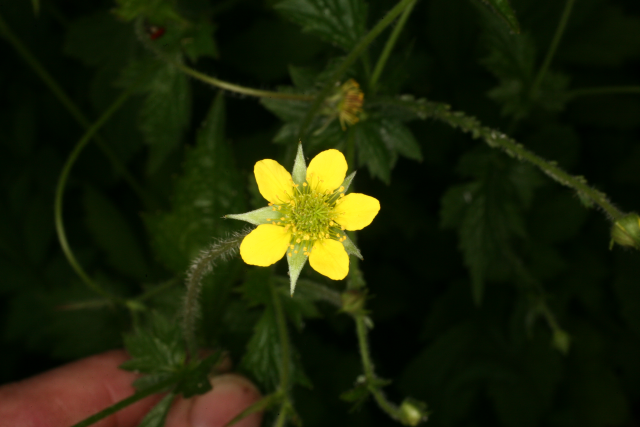
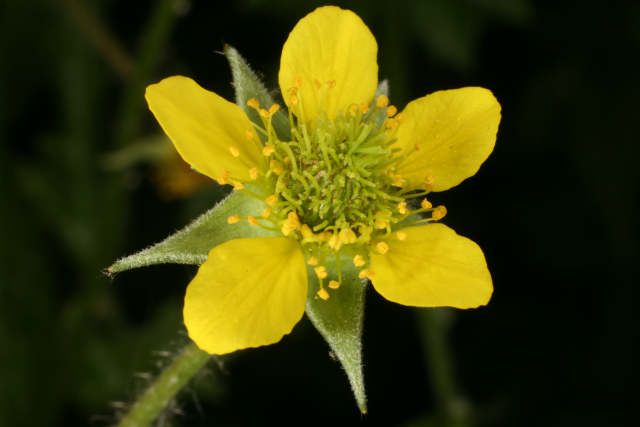
CLOVEROOT; WOOD AVENS.
While it is still used in herbal medicine, one recipe involves macerating it for a fortnight in proof spirit (40% w/v) and one wonders if the equivalent of neat whisky might not have had the therapeutic effect.
Oakeley, Dr. H. F. (2013). The Gardens of the Pharmacopoeia Londinensis.
It has a long history of early Christian associations, and was known as the ‘Blessed Herb’, in Latin Herba benedicta, and hence to St. Benedict’s Herb, as this saint was supposed to have blessed a glass of poisoned wine whereupon the glass broke. Quite how the latter related to the plant is not clear, but 15th century monks believed that it protected one against poisons and hanging it around one’s neck kept Satan at bay.
Oakeley, Dr. H. F. (2013). The Gardens of the Pharmacopoeia Londinensis.
Africa, Northern Africa
Asia-Temperate, Caucasus
Asia-Temperate, Middle Asia
Asia-Temperate, Siberia
Asia-Temperate, Western Asia, Iran
Asia-Temperate, Western Asia, Turkey
Asia-Temperate, Western Asia, Iraq
Europe, Eastern Europe
Europe, Middle Europe
Europe, Northern Europe
Europe, Northern Europe, Great Britain
Europe, Northern Europe, Ireland
Europe, Southeastern Europe
Europe, Southwestern Europe