 Back to List
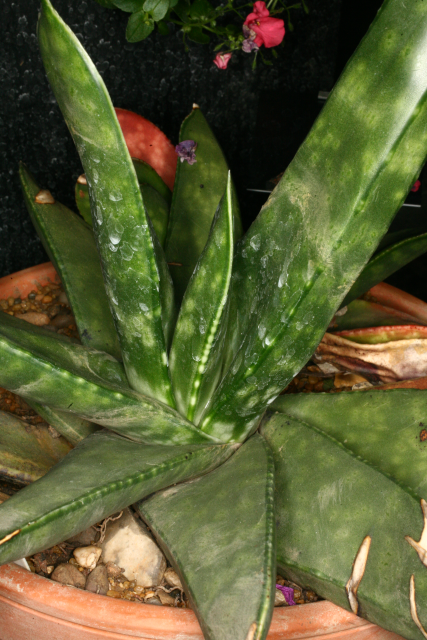
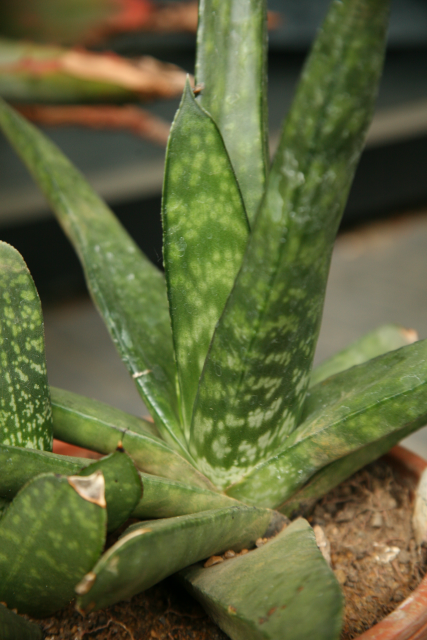
Gasteria croucheri (Hook.f.) Baker, J. Linn. Soc., Bot. 18: 196 (1880).
World Checklist of Monocotyledons. Royal Botanic Gardens, Kew at www.kew.org/wcsp/monocots
Aloe croucheri Hook. f. (basionym); Gasteria natalensis Baker.
Germplasm Resources Information Network (GRIN) at www.ars-grin.gov/cgi-bin/npgs/html/tax_search.pl
Family name change from Xanthorrhoeaceae
Plants of the World online, Kew Science http://www.plantsoftheworldonline.org/taxon/urn:lsid:ipni.org:names:30162924-2 Link
The name Gasteria originates from the Greek word gaster, meaning stomach: the flowers have the shape of a human stomach.
Oliver, IB. (1998). Grown Succulents, National Botanical Institute P.11
Named for J Croucher, Kew Gardener in 1869. (Bot. Mag. 1869, t.5812)
Desmond, Ray. (1977). Dictionary of British and Irish Botanists and Horticulturists. Taylor and Francis, London.
The plants are sometimes placed on the roofs of dwellings in the Eastern Cape, with the belief that the lightning will not strike the house. The Zulu people use parts of the plants in faction fights, believing that it will make them partly camouflaged so the enemy will not see them.
www.plantzafrica.com https://pza.sanbi.org/gasteria-croucheri
In South African
In South African traditional medicine (Muti) the whole plant parts of G. croucheri are used as a blood purifier, purgative, tonic wash and herbal medicine for skin problems such as ringworm, skin rash and warts. The leaves of G. croucheri are used as an emetic, to induce vomiting and as a herbal medicine for diarrhoea, hysteria, paralysis and rheumatism.
Journal of Pharmaceutical Sciences and Research https://www.jpsr.pharmainfo.in/Documents/Volumes/vol11issue09/jpsr11091947.pdf
Africa, Southern Africa, KwaZulu-Natal
Africa, Southern Africa, Cape Provinces
.JPG)
.JPG)
.JPG)