 Back to List
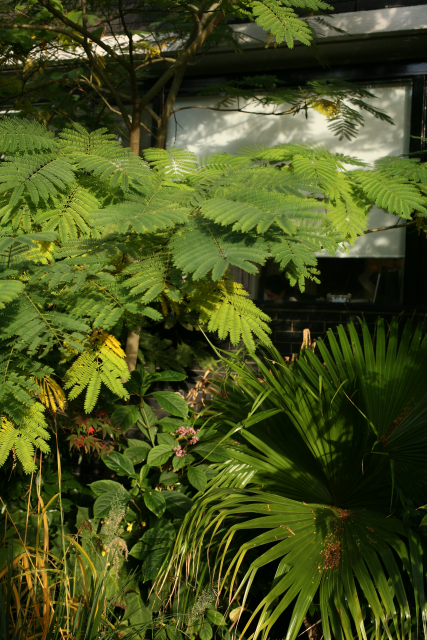
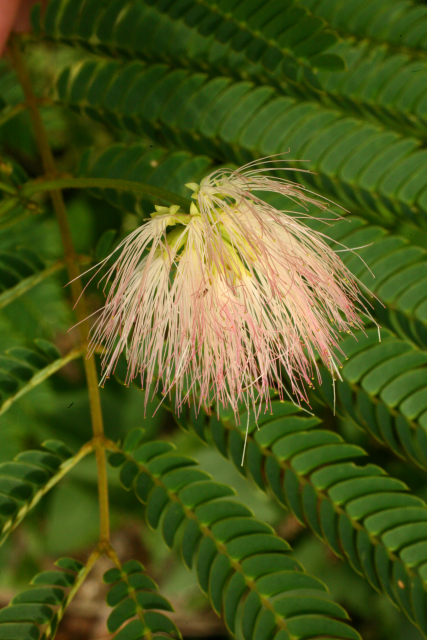
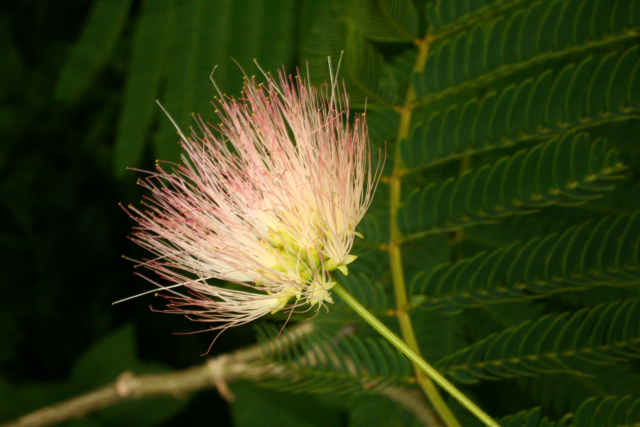
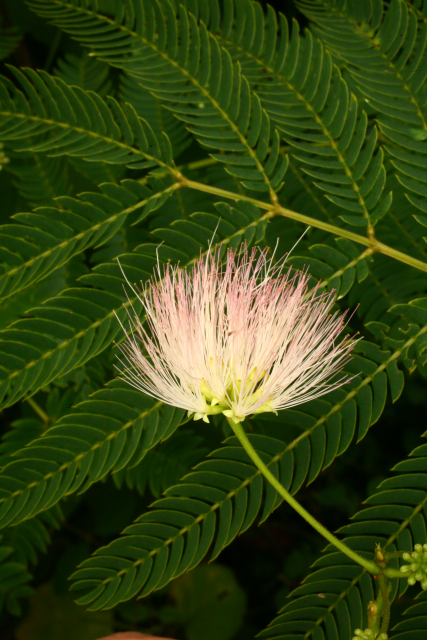
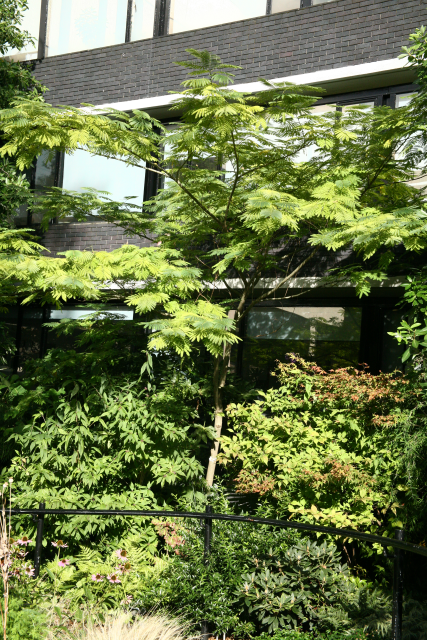
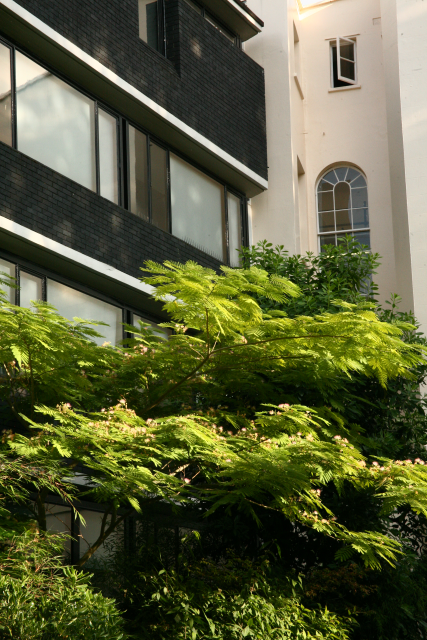
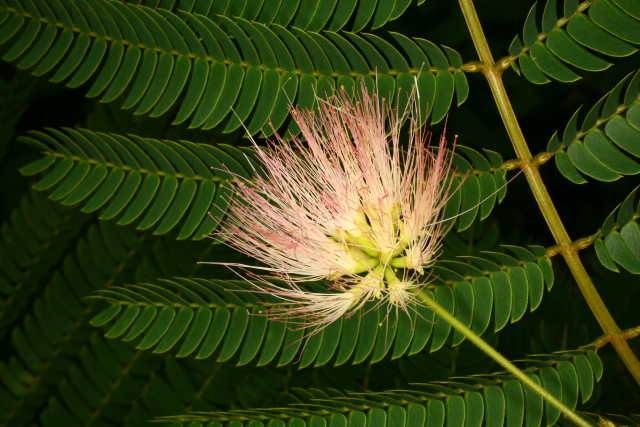
Albizia julibrissin Durazz. Fabaceae. Persian silk tree. Called 'shabkhosb' in Persian, meaning 'sleeping tree' as the pinnate leaves close up at night. Tropical tree. Named for Filippo degli Albizzi, an Italian naturalist, who brought seeds from Constantinople to Florence in 1749, and introduced it to European horticulture. The specific epithet comes from the Persian 'gul-i abrisham' which means "silk flower". Disribution: South Africa to Ethopia, Senegal, Madagascar, Asia. Bark is poisonous and emetic and antihelminthic. Various preparations are widely used for numerous conditions and the oxitocic albitocin is abortifacient. However, studies on the seeds and bark of other Albizia species in Africa, demonstrate it is highly toxic, half a kilogram of seeds given to a quarter ton bull, killed it in two hours (Neuwinger, 1996). A useful tree for contolling soil erosion, producing shade in coffee plantations, and as a decorative shade tree in gardens.
Oakeley, Dr. Henry F. (2013). Wellcome Library notes. Link
A gummy extract of the plant is used as a plaster. No more details are given. Wood - dense, hard, strong, takes a good polish. Used for furniture, industrial applications, firewood etc.
http://www.pfaf.org,
The flower heads are carminative, digestive, sedative and tonic. They are used internally in the treatment of insomnia, irritability, breathlessness and poor memory. The flowers are harvested as they open and are dried for later use. The stembark is anodyne, anthelmintic, carminative, discutient, diuretic, oxytocic, sedative, stimulant, tonic, vermifuge and vulnerary. It is used internally in the treatment of insomnia, irritability, boils and carbuncles. Externally, it is applied to injuries and swellings. The bark is harvested in spring or late summer and is dried for later use. A gummy extract obtained from the plant is used as a plaster for abscesses, boils etc and also as a retentive in fractures and sprains.
http://www.pfaf.org,
Named for Filippo degli Albizzi, an Italian naturalist, who brought seeds from Constantinople to Florence in 1749, and introduced it to European horticulture.
Oakeley, Dr. Henry F. (2013) Wellcome Library notes.
Family change from Mimosaceae to Fabaceae 13/11/2023
http://powo.science.kew.org/
Asia-Temperate, Western Asia, Iran
Asia-Temperate, Western Asia, Turkey
Asia-Temperate, Caucasus, Transcaucasus
Asia-Temperate, China
Asia-Temperate, Eastern Asia, Japan
Asia-Temperate, Eastern Asia, Taiwan
Asia-Tropical, Indian Subcontinent, Pakistan
Asia-Tropical, Indian Subcontinent, Nepal
Asia-Tropical, Indian Subcontinent, East Himalaya
Asia-Tropical, Indo-China, Myanmar