 Back to List
The species is named for James Gilbert Gerard (1793–1835), a Scottish army surgeon in the Bengal Medical Service who collected plants in the Himalayas (and not for John Gerard the 16th/17th century surgeon/herbalist). He served in Nepal in 1815 with the Gurkhas in the 1st Nasiri Battalion of the British army in Bengal, and his grave at Subathu notes his death on 31 March 1835 at the age of 42. While in Sabathu he was paid 80 rupees a month for superintending the Vaccine Establishment there (1823–4), but later records show that he travelled on full military pay through Afghanistan and Central Asia (1831–3). The plant is also named for his two brothers, Patrick (1794–1848), a meteorologist, and Alexander (1792–1839), a scientist. On his younger brother’s grave (Captain Patrick Gerard, of the same regiment) in Simla, it notes how the three brothers were among the first to explore the Trans-Himalayan regions. Captain Alexander Gerard was in the 27th Native Infantry and his two-volume Narrative of a journey from Caunpoor to the Boorendo pass in the Himalaya Mountains viâ Gwalior, Agra, Delhi, and Sirhind (1810, with others), and A map of Koonawar and Account of Koonawar in the Himalaya (published posthumously, 1841) from his travels in 1817 and 1818 (accompanied on this occasion by James) have little of botanical interest. Alexander died of malaria, which recurred while back in Aberdeen. They were responsible for the discovery of Simla, then in deep forest but later an important European residential area. They do seem to have spent years doing nothing else than walking (and no ‘soldiering’) where few, if any, Europeans had ever been before, surveying and recording.
Oakeley, Dr. Henry. (2012). Doctors in the Medicinal Garden. Plants named after physicians. Royal College of Physicians. Link
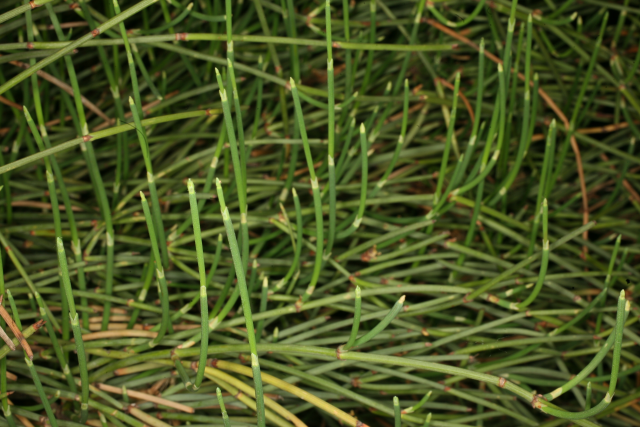
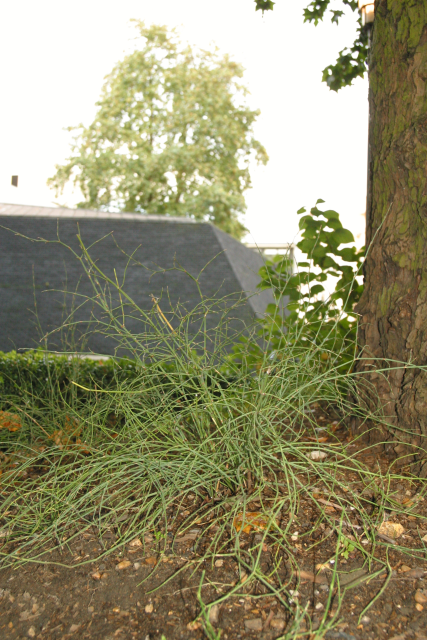
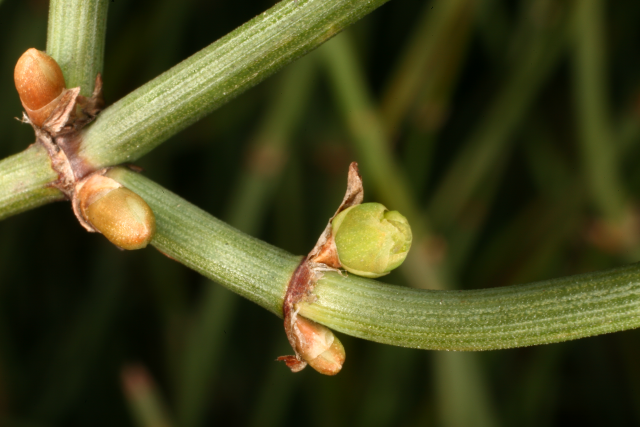
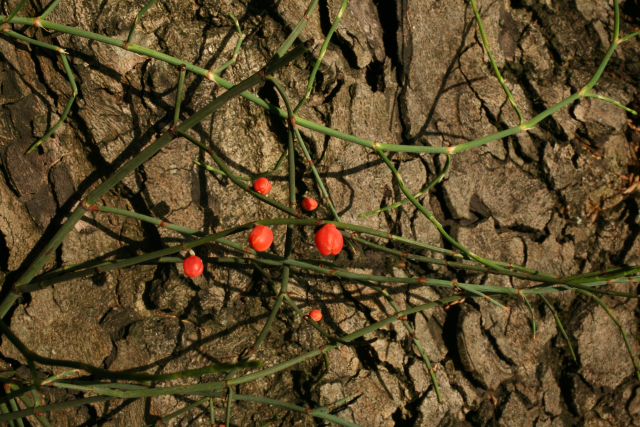
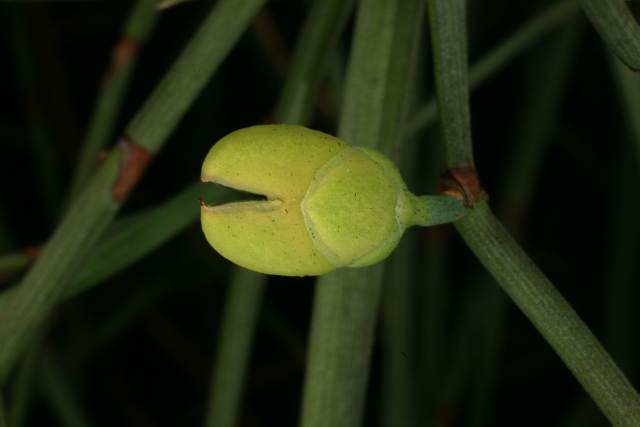
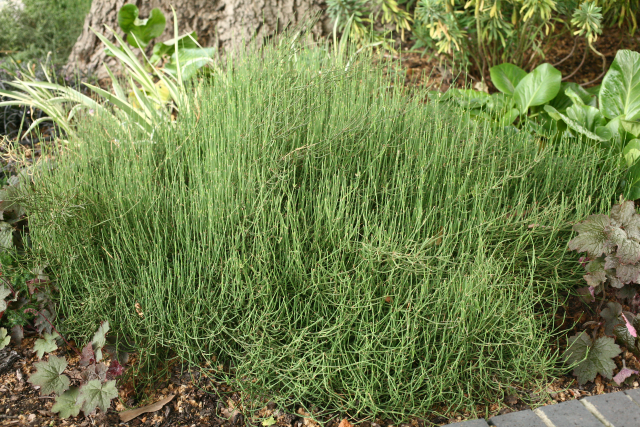
Found on rocky inclines ranging from Afghanistan to China and the Indian subcontinent, this creeping shrub with scale-like leaves is a hardy member of the family Ephedraceae. In the Medicinal Garden it provides an excellent evergreen ground cover for dry soil at the base of a large plane tree. The variety sikkimensis is more vigorous than the type species which also grows happily nearby. It is easily propagated by careful division of plants in spring (by Clare Beacham).
Oakeley, Dr. Henry. (2012). Doctors in the Medicinal Garden. Plants named after physicians. Royal College of Physicians. Link
Ephedra- Greek name for the common mare’s tail (Hippuris) which it somewhat resembles. For botanists, Ephedra is of great interest, as the genus forms a linking group between conifers and flowering plants.
Stearn, W.T. (1996). Dictionary of Plant Names for Gardeners. Cassell. p.132
gerardiana- Named for James Gilbert Gerard (1795-1835), an army surgeon in India, who collected plants in the Himalayas. P. 150
Stearn, W.T. (1996). Dictionary of Plant Names for Gardeners. Cassell. p.150
A cyclist taking amphetamines (synthesised from ephedrine, present in the sap of the primitive plant species Ephedra) died in the 1960 games.
DeSwiet, Michael. (2012). Plants and the Olympic Games. Link
Prescription only medicine: ephedrine, pseudephedrine, amphetamine, ecstasy
Induction of noradrenaline release. Contains ephedrine and pseudoephedrine. These are bronchial dilators and vasoconstrictors, used for asthma and nasal congestion. Amphetamines and ecstasy are synthesised from them.
Oakeley, Dr. H.F. (2013). Medicines from RCP plants label list 5-2013.docx.
Asia-Tropical, Indian Subcontinent, Nepal
Asia-Tropical, Indian Subcontinent, East Himalaya
.JPG)