
 Back to List
Culpeper: ‘Ageratum, Mesue [an Arabian physician] his Eupatorium. Maudlein. ... provokes urine and the terms, dries the brain, opens stoppings, helps the green sickness [a form of anaemia], and profits such as have a cold, weak liver; outwardly applied it takes away the hardness of the matrix [=uterus] and fills hollow ulcers with flesh.
Culpeper, Nicholas. (1650). A Physical Directory . London, Peter Cole.
Notes: Its most long standing use in herbal medicine is as a vulnary – an agent for healing wounds. Laid under a pillow it was said to induce sound sleep, but it has not been used internally for this. It has been used for fevers, as a tonic, diuretic, as a gargle and much else. The species name comes from Mithridates Eupator VI of Pontus (132-63 BC) who was a great herbalist as well as a formidable soldier whose army of 400 ships, 50,000 horse and 250,000 infantry challenged the might of Rome for many years. A mithridate is the name given to any cure-all. There are interesting articles about Mithridates on http://www.fordham.edu/Halsall/ancient/mithradates1.html and http://en.wikipedia.org/wiki/Mithridates_VI_of_Pontus
Oakeley, Dr. H. F. . (2013). The Gardens of the Pharmacopoeia Londinensis. Link
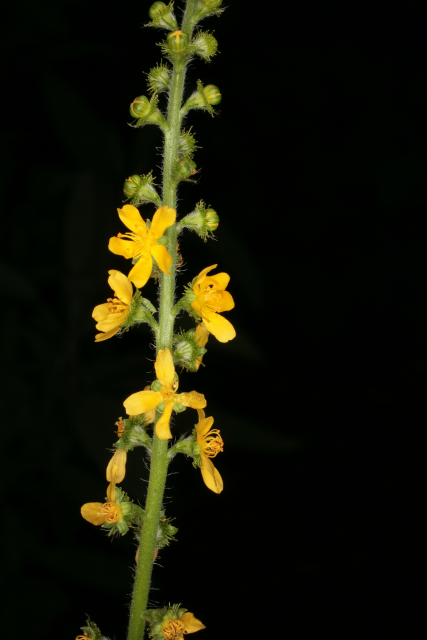
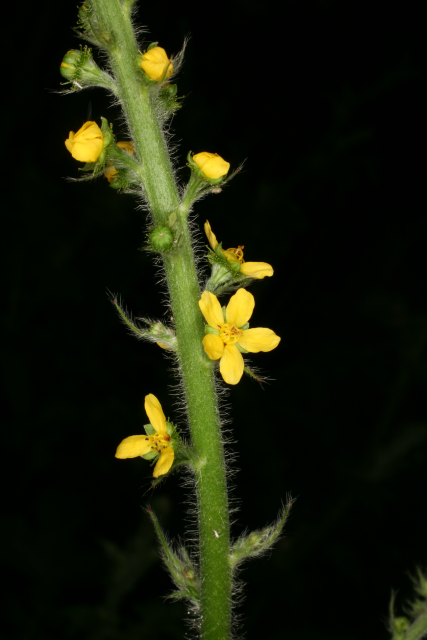
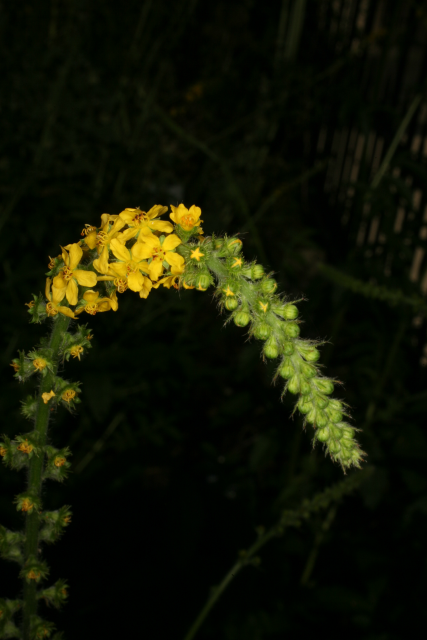
Agrimonia eupatoria L. Agrimony, Eupatorium, Maudlein. Perennial herb. The species name comes from king Mithridates Eupator VI of Pontus (132-63 BC) who took regular doses of poison to develop an immunity to them. A 'Mithridate' was a medicine against poisons. Distribution: N. and S. Africa, N. Asia, Europe. '…provokes urine and the terms [periods], dries the brain, opens stoppings, helps the green sickness [iron deficiency anaemia]. , and profits such as have a cold weak liver; outwardly applied it takes away the hardness of the matrix [=uterus] and fills hollow ulcers with flesh' (Culpeper, 1650). Dioscorides (Beck, 2005) recommends mashed leaves in hog's grease for healing scarring ulcers, and the seed in wine for dysentery and serpent bites. Goodyear's 1655 translation of Dioscorides (Gunther 2000) has this as cannabis, which Parkinson (1640) says is in error and summarises the manifold uses from classical authors, from removing splinters to stopping menorrhagia.
Oakeley, Dr. Henry F. (2013). Wellcome Library notes. Link
The species name comes from Mithridates Eupator VI of Pontus (132-63 BC) who was a great herbalist as well as a formidable soldier whose army of 400 ships, 50,000 horse and 250,000 infantry challenged the might of Rome for many years. A mithridate is the name given to any cure-all. There are interesting articles about Mithridates on http://www.fordham.edu/Halsall/ancient/mithradates1.html and http://en.wikipedia.org/wiki/Mithridates_VI_of_Pontus
Oakeley, Dr. H. F. (2013). The Gardens of the Pharmacopoeia Londinensis.
It gained its species name from Mithridates VI Eupator (134–63 BC), after whom a complex, and mythological, potion – a Mithridate – to cure all poisoning is named. He was King of Pontus and Armenia Minor (now northern Turkey), engaged in huge wars against Rome and indulged in brutal genocides. He is more famous for his interest in antidotes to poisons. Leonhart Fuchs writes (excerpted from the 1999 facsimile and commentary on his herbal of 1542): Mithridates, indeed, mighty king of Pontus and the Parthians, was not content to have won renown for his skill in 22 languages and from his various victories; but that he might become more famous and illustrious, he applied himself energetically to the business of obtaining exact knowledge of all medicinal simples, especially those that were antidotes to deadly poisons. His father, Mithridates V, was assassinated by poison in 120 BC, so Eupator reportedly developed immunity to poisons by regularly consuming sub-lethal doses. When he was finally defeated and in exile in the Crimea he tried to commit suicide by poison, but it had no effect, so he had to ask a loyal army officer to kill him with his sword to avoid capture by the Romans.
Oakeley, Dr. Henry. (2012). Doctors in the Medicinal Garden. Plants named after physicians. Royal College of Physicians. Link
OTHER COMMON NAMES: BEGGAR'S LICE; BEGGAR'S TICKS; CHURCH STEEPLES; CLOT BUR; COCKLE BUR; STICKLEWORT.
The Royal Horticultural Society Horticultural Database, available at www.rhs.org.uk
Agrimony, Ageratum, Eupatorium, Maudlin.
Culpeper, Nicholas. (1650). A Physical Directory . London, Peter Cole.
Africa, Macaronesia, Madeira
Africa, Macaronesia, Canary Is.
Africa, Northern Africa, Algeria
Africa, Northern Africa, Morocco
Africa, Northern Africa, Tunisia
Asia-Temperate, Caucasus
Asia-Temperate, China
Asia-Temperate, Middle Asia, Kazakhstan
Asia-Temperate, Middle Asia, Kyrgyzstan
Asia-Temperate, Middle Asia, Tadzhikistan
Asia-Temperate, Middle Asia, Turkmenistan
Asia-Temperate, Western Asia, Afghanistan
Asia-Temperate, Western Asia, Cyprus
Asia-Temperate, Western Asia, Iran
Asia-Temperate, Western Asia, Iraq
Asia-Temperate, Western Asia, Lebanon-Syria
Asia-Temperate, Western Asia, Turkey
Europe, Eastern Europe
Europe, Middle Europe
Europe, Northern Europe
Europe, Southeastern Europe
Europe, Southwestern Europe
.JPG)
.JPG)