 Back to List
Treated as a tender annual and replaced every year.
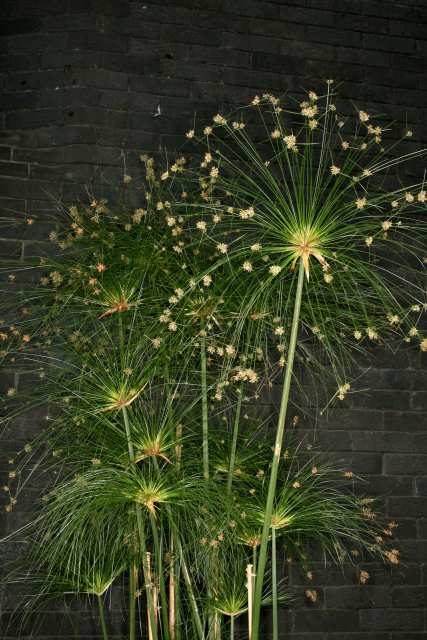
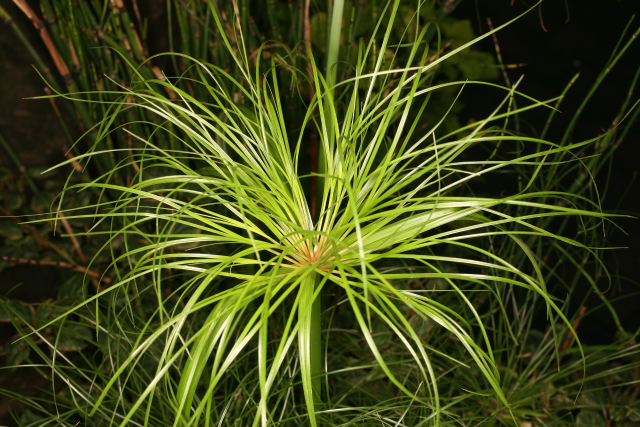
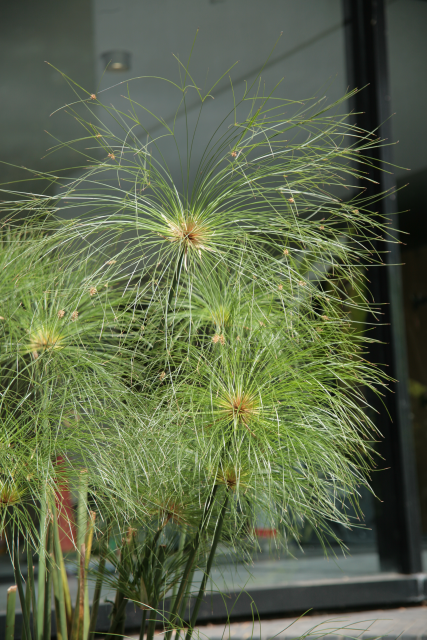
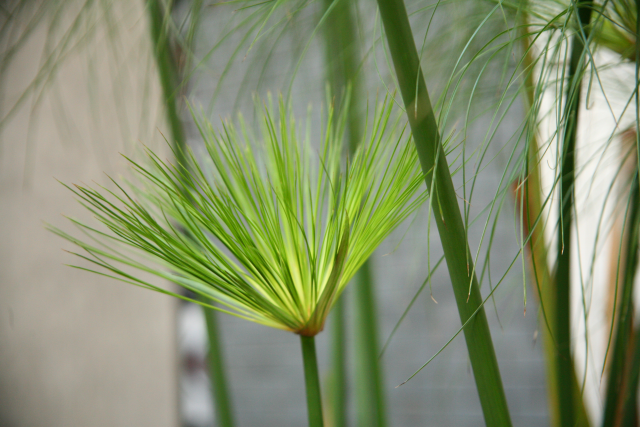
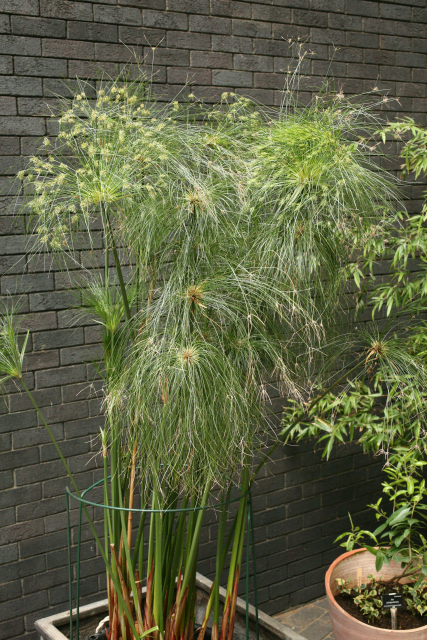
‘Papyrus grew in abundance along the River Nile in ancient times. The plant had multiple uses. The pith was peeled and arranged in sheets, two being beaten together to make writing material. The fibres were woven into sail and cloths and mats, or twisted into ropes, or plaited into sandals. Jar- stoppers and children’s balls of papyrus have been found. The mature stems were tied together and made into boats, or they were used as fire wood. The feathery flowers on their long stems were the ideal base for tall composite bouquets used to decorate temples and tombs, and the stalks were edible. Herodotus tells that the lower extremity of the plant about one cubit of it (about half a meter), was a delicacy particularly when first baked in a glowing hot vessel on the fire (II.92). Theophrastes adds that all the natives 'chew the papyrus raw, boiled or roasted; they swallow the juice and spit out the quid' (IV.8.4).' [A practise also mentioned by Dioscorides].
Manniche, Lisa. (1989). An Ancient Egyptian Herbal . British Museum Publications Ltd.
The Ebers papyrus, one of the oldest medicinal texts dated to about 1550 B C, is written on parchment made of papyrus.
https://www.britannica.com/topic/Ebers-papyrus
Used in Pharaonic medicine as a bandage for stiff limbs and as an eye compress.
Manniche, Lisa. (1989). An Ancient Egyptian Herbal . British Museum Publications Ltd.
'In traditional Islamic medicine the ashes of papyrus matting were applied to open wounds to dry them out, the ashes being also considered beneficial for sores of the mouth, and, mixed with vinegar, to treat nose-bleed.'
Manniche, Lisa. (1989). An Ancient Egyptian Herbal . British Museum Publications Ltd.
Africa, East Tropical Africa, Kenya
Africa, East Tropical Africa, Tanzania
Africa, East Tropical Africa, Uganda
Africa, Northeast Tropical Africa, Chad
Africa, Northeast Tropical Africa, Ethiopia
Africa, Northeast Tropical Africa, Sudan
Africa, Northern Africa, Egypt
Africa, South Tropical Africa, Angola
Africa, South Tropical Africa, Malawi
Africa, South Tropical Africa, Mozambique
Africa, South Tropical Africa, Zambia
Africa, Southern Africa, Botswana
Africa, Southern Africa, Namibia
Africa, Southern Africa, KwaZulu-Natal
Africa, West Tropical Africa, Benin
Africa, West Tropical Africa, Ivory Coast
Africa, West Tropical Africa, Guinea
Africa, West Tropical Africa, Liberia
Africa, West Tropical Africa, Nigeria
Africa, West Tropical Africa, Senegal
Africa, West-Central Tropical Africa, Burundi
Africa, West-Central Tropical Africa, Gabon
Africa, West-Central Tropical Africa, Congo
Africa, West-Central Tropical Africa, Rwanda
Africa, West-Central Tropical Africa, Zaire
Africa, Western Indian Ocean, Madagascar
Africa, Western Indian Ocean, Mauritius
Africa, Western Indian Ocean, Réunion
.JPG)