 Back to List
Species name for Max Leichtlin (1831-1910) of Baden-Baden who introduced many plants into cultivation mostly from the Near East.
Stearn, W.T. (1996). Dictionary of Plant Names for Gardeners. Cassell. p.187
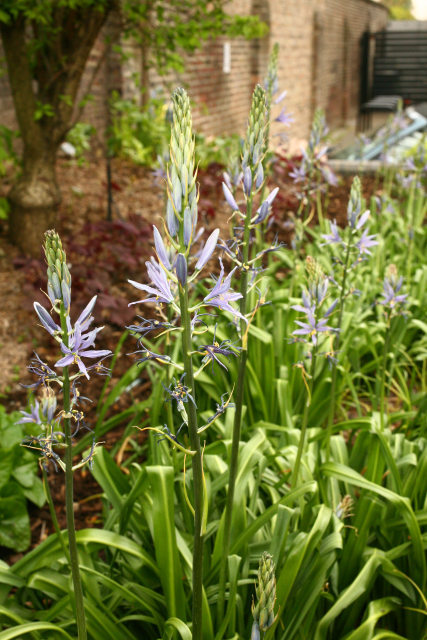
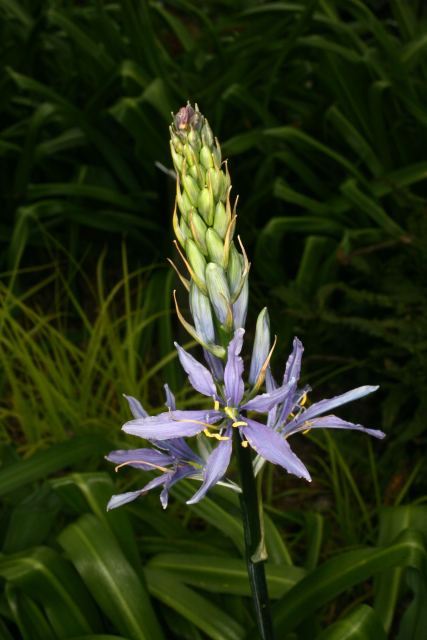
Camassia leichtlinii (Baker) S.Watson Hyacinthaceae. Great Camas, Quamash. The species was named for Maximillian Leichtlin (1831-1910 of Baden Baden, Germany, bulb enthusiast who corresponded with J.G. Baker at Kew. Bulbous herb. Distribution: North America. The bulbs of Camassia species were eaten by the Native Americans, the Nez Perce, after cooking by steaming for a day - which suggests they may be poisonous raw. American explorers, Meriwether Lewis and William Clerk, were given them on their expedition (1804-1806) when they ran out of food. The bulbs of the similar looking 'Death camus', Toxicoscordion venenosum have been fatal when ingested by mistake (RBG Kew on-line). Steroidal saponins, which are precursors in the manufacture of steroids and cytotoxic activity has been detected in the sap of the bulbs.
Oakeley, Dr. Henry F. (2013). Wellcome Library notes. Link
Northern America, Northwestern U.S.A.
Northern America, Southwestern U.S.A.
Northern America, Western Canada
.JPG)
.JPG)