 Back to List
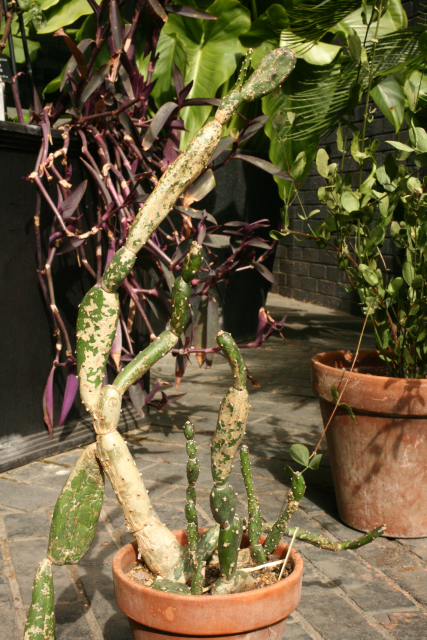
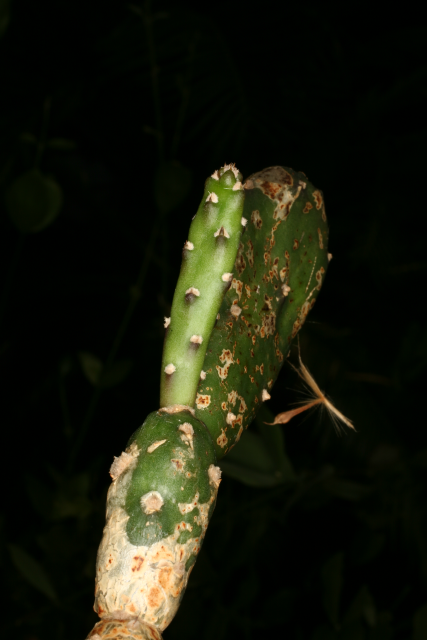
Previously grown as Nopalea cochenillifera
Plants of the World online, Kew Science http://plantsoftheworldonline.org/taxon/urn:lsid:ipni.org:names:1008816-2 Link
This is the host to the cochineal scale insect, Dactylopius coccus. The insect produces the scarlet dye carminic acid, which has a chemical structuyre similar to alizarin - see Rubia tinctorum. The carboxylic acid group in carminic acid makes it bond well with protein fibres, although aluminium slats can be used as a mordant to give better colour fastness.
Sequin, M. (2012). The Chemistry of Plants. Perfumes Pigments and Poisons. Royal Society of Chemistry, Cambridge, UK. p.173
The fruits and cladodes are applied in folk medicine[http://mansfeld.ipk-gatersleben.de/pls/htmldb_pgrc/f?p=185:3:4292127278597336 ]. The flattened stem sections are used as poultices to treat mycoses (fungal skin infections) and fevers. The roasted branches are sliced and applied as a poultice to relieve pain, swelling, and localized burning sensations resulting from filaria. The grated stem, mixed with corn meal and soft grease, is warmed for external application to relieve heavy chest colds and fever associated with pneumonia. The pads are warmed and placed on the forehead as a refresher. The sap of the plant is used in the treatment of baby's colds and wheezing. The leaves are used in the treatment of spleen problems[http://botany.si.edu/bdg/medicinal/index.html ].
https://pfaf.org https://pfaf.org/User/Plant.aspx?LatinName=Nopalea+cochenillifera
Northern America, Mexico