 Back to List
Culpeper: ‘Crassula. Orpine. ... Outwardly, used with vinegar it clears the skin, inwardly taken, it helps gnawings of the stomach and bowels, ulcers in the lungs, bloody flux and Quinsy in the throat: for which last disease, it is inferior to none. Take not too much of it ...’
Culpeper, N. (1652). The English Physitian. London.
Notes: The Plants for a Future database www.pfaf.org reports: ‘The whole plant is astringent and cytostatic. It is a popular remedy for diarrhoea, stimulates the kidneys and has a reputation in the treatment of cancer. A poultice of the crushed leaves has been used in the treatment of boils and carbuncles.’ Named after Telephus, the son of Hercules.
Plants for a Future (2010) (http://www.pfaf.org/)
Named after Telephus the son of Hercules.
Oakeley, Dr. Henry F. (2013). Wellcome Library notes. Link
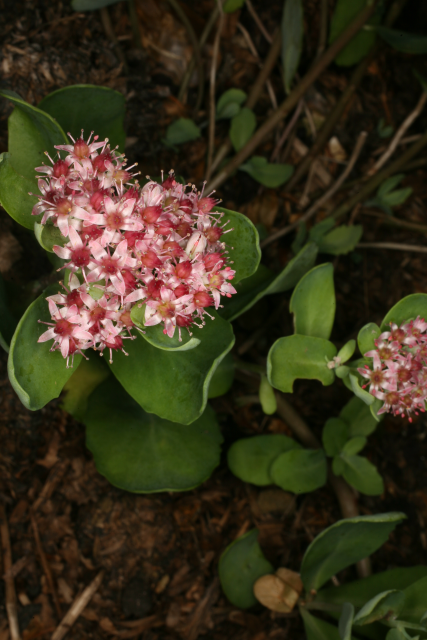
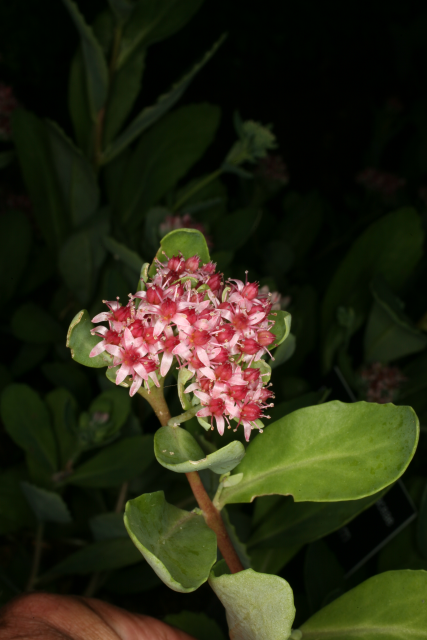
Hylotelephium telephium (L.)H.Ohba previously Sedum telephium L. Crassulaceae. Orpine, Stonecrop. Culpeper (1650) calls it Crassula. Orpine. Named after Telephus, the son of Hercules (Stearn, 1994). Lyte calls it Crassula minor, Orpyne, Faba crassa, Fabaria, He also calls it Crassula major, Wild Prickmadam, and Sedum mlnor, Stone Hore.
Culpeper, Nicholas. (1650). A Physical Directory . London, Peter Cole.
OTHE COMMON NAMES: ALPINE LIVE-LONG; FROG'S STOMACH; HARPING JOHNNY; LIFE-EVERLASTING; LIVE-FOR-EVER; LIVELONG; MIDSUMMER MEN; ORPHAN JOHN; STONE-HOT; WITCH'S MONEYBAGS.
The Royal Horticultural Society Horticultural Database, available at www.rhs.org.uk
Grown previously as Sedum telephium.
The Royal Horticultural Society Horticultural Database, available at www.rhs.org.uk