 Back to List
Euphor’bia- Spurge. Supposed to have been named for Euphorbius, physician to the King of Mauretania.
Stearn, W.T. (1996). Dictionary of Plant Names for Gardeners. Cassell. p.136
The species name commemorates Baron Milius, once Governor of Réunion, who introduced the species to France in 1821.
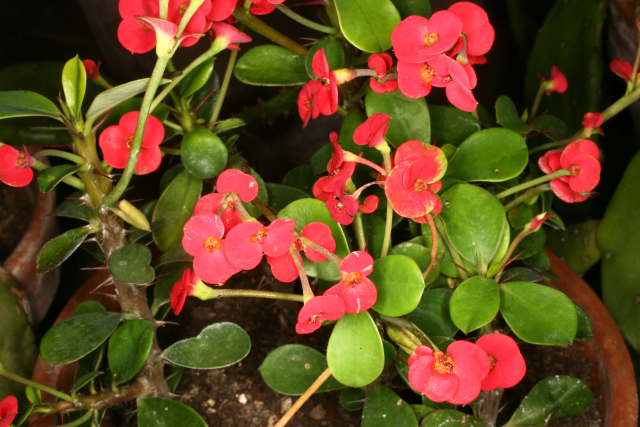
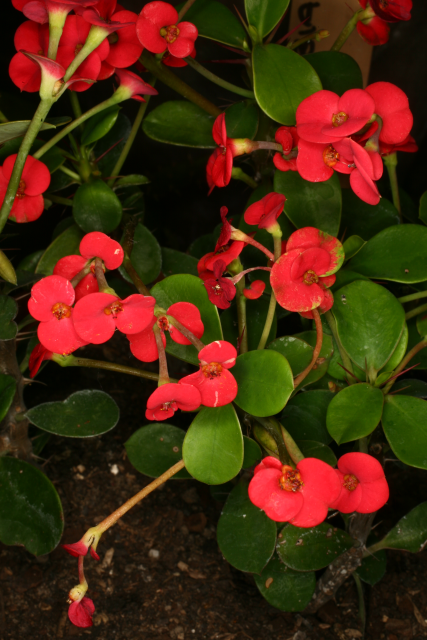
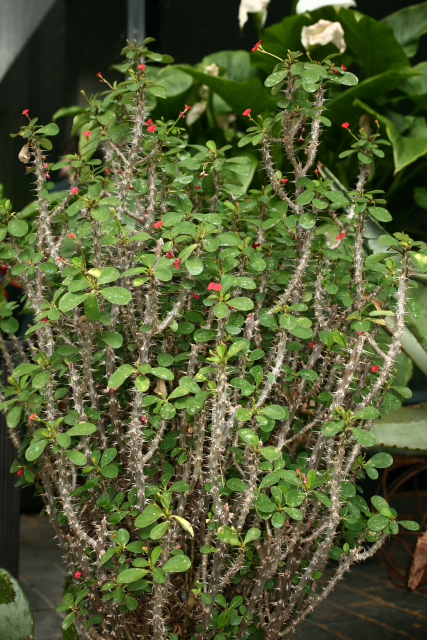
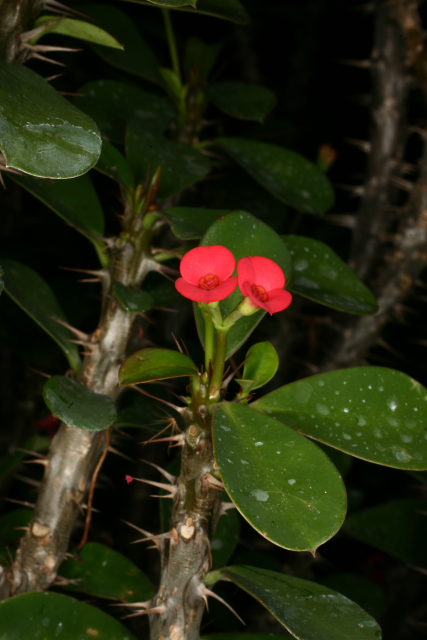
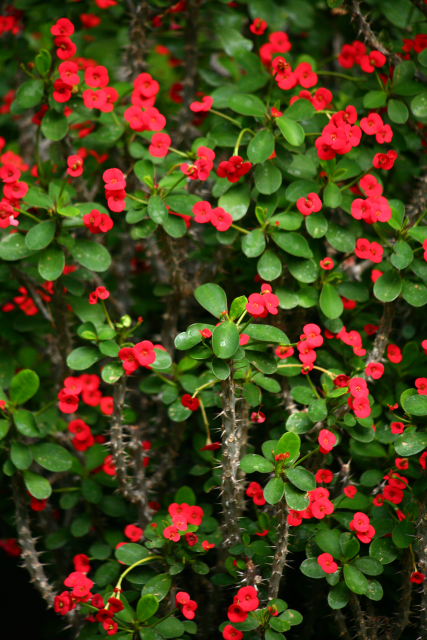
Bushy, slow-growing, mainly evergreen, semi-succulent shrub with slender, fleshy, thorny stems and branches; the well0spaced thorns are wider at the bases. Bright green leaves, 3.5cm long, are obovate, pointed and tough. Yellow cyathia, enclosed by very intense red involucres, are borne in axillary cymes in spring or summer. 1m high and 45cm wide.
Brickell, C. (2003). A-Z Encyclopedia of Garden Plants. Dorling Kindersley. p.439
Frost tender. Grow under glass, grow in a mix of 3 parts loam-based potting compost (John Innes no. 2) and 1 part grit, in full light. Ventilate well. When in growth, water sparingly and apply a low- nitrogen liquid fertilizer monthly. Keep dry in winter. During the growing season, grow outside in a pot in full sun. Root stem-tip cuttings with bottom heat in spring or early summer. It can be susceptible to grey mould and mealy bug.
Brickell, C. (2003). A-Z Encyclopedia of Garden Plants. Dorling Kindersley. p.436
The genus is named for Euphorbus (fl. circa 10 BC – AD 20), the Greek physician to the Berber king Juba II (c. 50 BC – AD 23) of Numidia, a country which once existed within modern Tunisia and Algeria. He was the brother of Antonio Musa (vide Musa), physician to Caesar Augustus. The king married Cleopatra Selene, the daughter of Mark Anthony and Cleopatra, and later, Glaphyra, the widow of the son of Herod the Great. The king was interested in plants and, according to Pliny the Elder (Pliny, AD 79), gave it its name in 12 BC. In the 16th century it was known as Tithymalus, but Linnaeus restored the name Euphorbia in 1753. One story is that Euphorbus cured King Juba from a stomach condition with a Euphorbia. The other is that the plant was discovered by the king in the Atlas mountains of Morocco and that, as Euphorbus was a fat man and the plant was fleshy, he thought it an apt name as ‘euphorbus’ in Greek means ‘eu = good’ and ‘phorbe = fodder’. Juba is remembered elsewhere, for he gives his name to the capital of the new country of South Sudan. Euphorbia regis-jubae, discovered on an expedition to the Canary Islands, sponsored by King Juba, also commemorates him.
Oakeley, Dr. Henry. (2012). Doctors in the Medicinal Garden. Plants named after physicians. Royal College of Physicians. Link
Prescription only medicine: Leucodoplin
There is a video by Dr Henry Oakeley
Videos from the garden Link
Toxic due to highly irritant saponins in sap (‘Latex’)
Professor Anthony Dayan, 2022
Africa, Western Indian Ocean, Madagascar