 Back to List
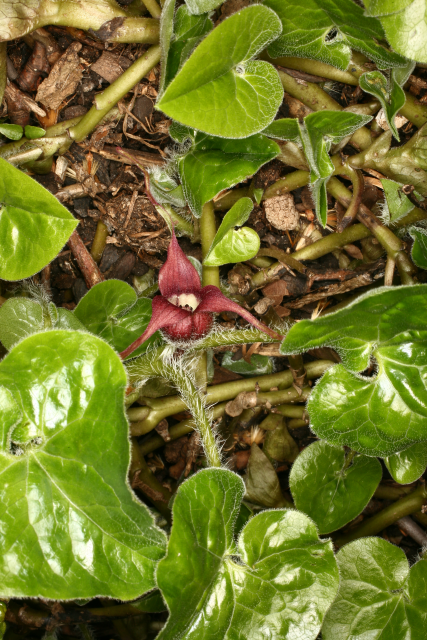
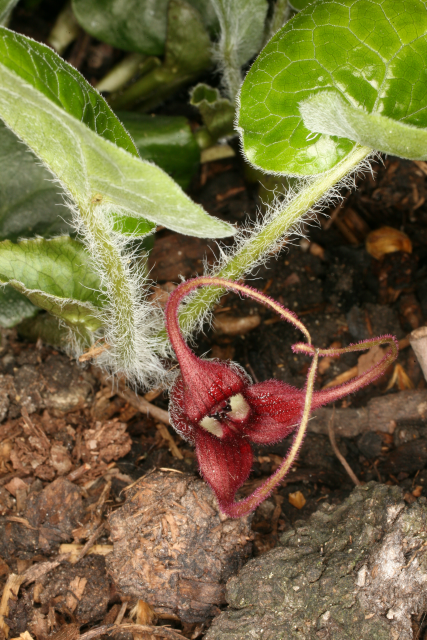
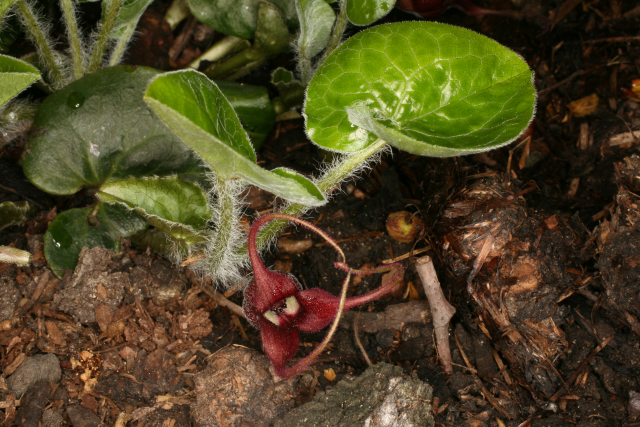
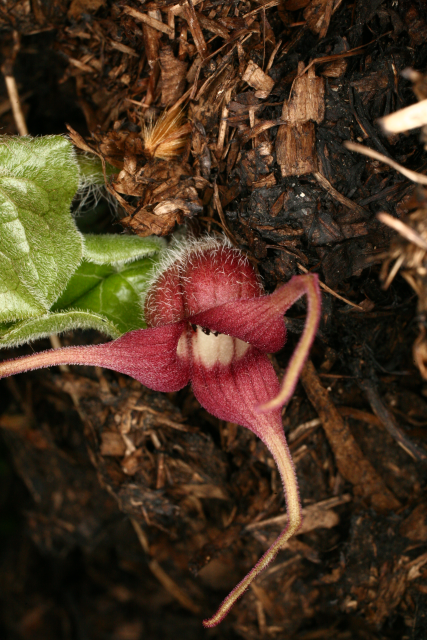
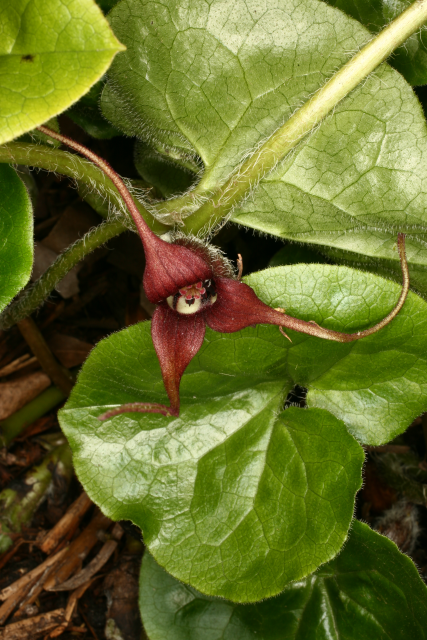
Asarum caudatum Lindl. Aristolochiaceae. British Columbia wild ginger. Asarum is the Latin name for wild ginger; caudatum means 'with a tail' referring to the tails on the petals. Rhizomatous perennial herb. Distribution: Western USA, British Columbia to California. Not described until 1831 so no historical uses noted. May have been used instead of widely in North America instead of Asarum canadense when latter not available. In Canada A. canadense used root for heart complaints. The Menomini, Meskwaki, Ojibwa and Potawatomi used the root as a seasoning to make food palatable. Used for throat, stomach, lung problems and earache (Austin, 2004).
Oakeley, Dr. Henry F. (2013). Wellcome Library notes. Link
Possibly used as a substitute for A. canadense, q.v.
Austin, Daniel, F. (2004) Florida Ethnobotany. CRC Press.
Not to be taken internally: mutagenic. Native Americans used warm fresh leaves as a poultice to bring boils to a head, to put on babies' navels to prevent infection and for toothache. Tea as a wash for sores. Native Americans took tea for indigestion, colds and constipation.
wikipedia (May 2017) https://en.wikipedia.org/wiki/Asarum_caudatum_-_mw-navigation
Northern America, Northwestern U.S.A., Washington
Northern America, Southwestern U.S.A., California
Northern America, Western Canada, British Columbia