
 Back to List
Traditional Herbal Medicine Registration (THMR).
Culpeper (1649) “... resist all cold afflictions of the brain, convulsions falling sickness, they open cold stomachs, and open obstructions of the liver, they provoke urine and the terms, bring forth the birth and afterbirth.”
Culpeper (attributed to) , N. Culpeper's Complete Herbal. W. Foulsham, London.
Medicinal uses Uses supported by clinical data Inhalation therapy for symptomatic treatment of anxiety, restlessness and to induce relaxation (19–22). Externally in balneotherapy for the treatment of circulation disorders (23). Uses described in pharmacopoeias and well established documents Symptomatic treatment of insomnia, and as a carminative for the treatment of gastrointestinal disorders of nervous origin (15, 24). Uses described in traditional medicine Orally as a cholagogue, diuretic and emmenagogue; externally for the treatment of burns, diarrhoea, headaches, sore throats and wounds (15). Contraindications Aetheroleum Lavandulae is contraindicated in cases of known allergy to the plant material. Owing to its traditional use as an emmenagogue and abortifacient, the essential oil should not be used internally during pregnancy (50–52).
WHO Monographs on Selected Medicinal Plants. Volume 3. 2007. WHO, Geneva
Essential oil from flowers used in soap, perfume, cleaning agents, food flavouring, insect repellent. Harvested as soon as flowers have faded for best oil content. Flowers used in pot pourii, insect repellent, as a strewing herb, to repel mice, flowering stems once flowers removed can be burnt as incense.
Plants for a Future at www.plantsforafuture.org.uk
Research carried out by Dr Paul Chazot and colleagues at the School of Biological and Biomedical Sciences at Durham University suggest that essential oil of Lavandula angustifolia and Melissa officinalis may prove efficacious in reducing agitation in patients suffering from dementia.
Chazot et al, Pl . (2008). Pharmacological profile of an essential oil derived from Melissa officinalis with anti-agitation properties.
Europe, Southeastern Europe, Italy
Europe, Southwestern Europe, France
Europe, Southwestern Europe, Spain
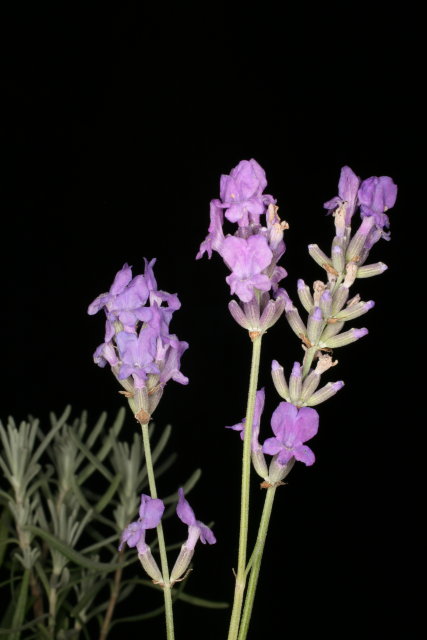
.JPG)