
 Back to List
An infusion of the leaf has been used as a poultice for boils and abscesses. Burdock root is a remedy for the treatment of dry and scaly skin conditions such as psoriasis and eczema.
DeSwiet, Michael. (2012). Greater Burdock, Arctium lappa.
Culpeper: ‘Burdanae, etc. Of Bur, Clot-Bur or Burdock, ... helps such as spit blood and matter, bruised and mixed salt and applied to the place, helpeth the bitings of mad dogs. It expels wind, easeth pains of the teeth, strengthens the back, helps the running of the reins, and the whites in women, being taken inwardly.’
Culpeper, Nicholas. (1650). A Physical Directory . London, Peter Cole.
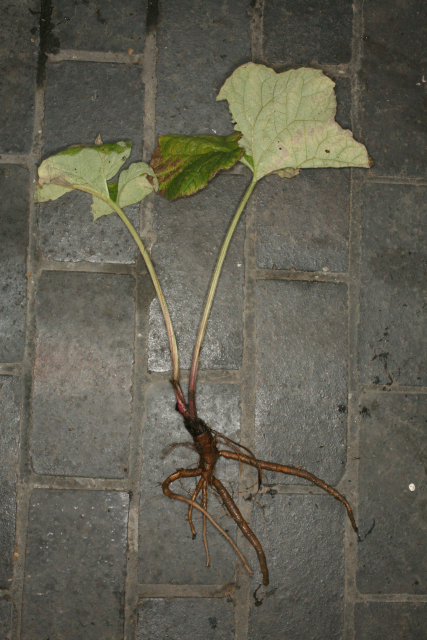
The roots contain inulin, which is made into a non-digestible sweetener for diabetics. It has a multitude of uses in herbal medicine, in particular it is a component of a compound called ‘essiac’ that has been widely used as a treatment of cancers in the USA, but which is of no proven benefit. The young roots can be eaten raw or cooked.
Oakeley, Dr. H. F. (2013). The Gardens of the Pharmacopoeia Londinensis.
Traditional Herbal Medicine Registration (THMR).
Culpeper: ‘Burdanae, etc. Of Bur, Clot-Bur or Burdock,
Culpeper, Nicholas. (1650). A Physical Directory . London, Peter Cole.
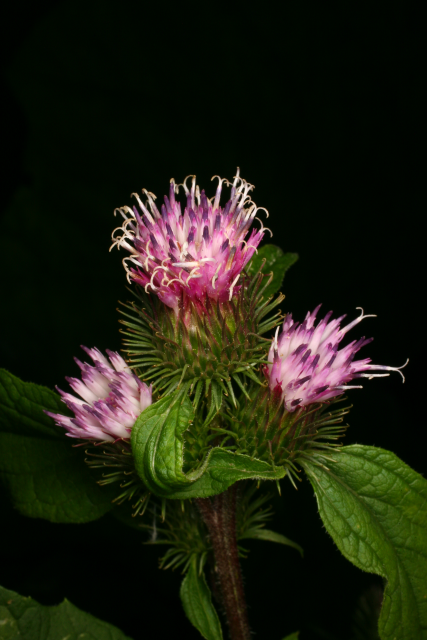
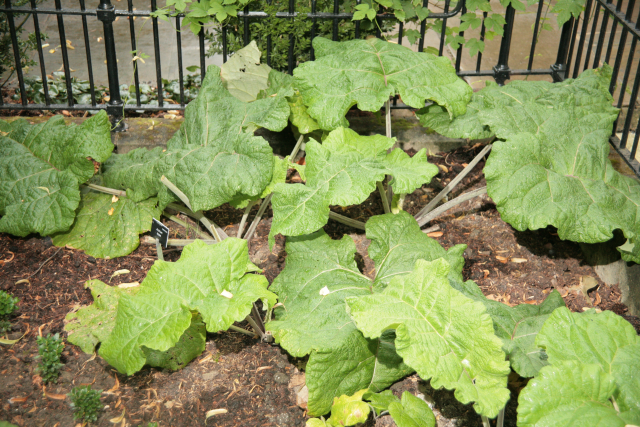
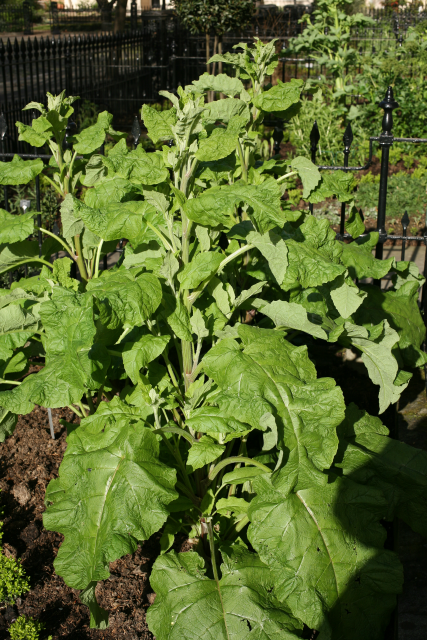
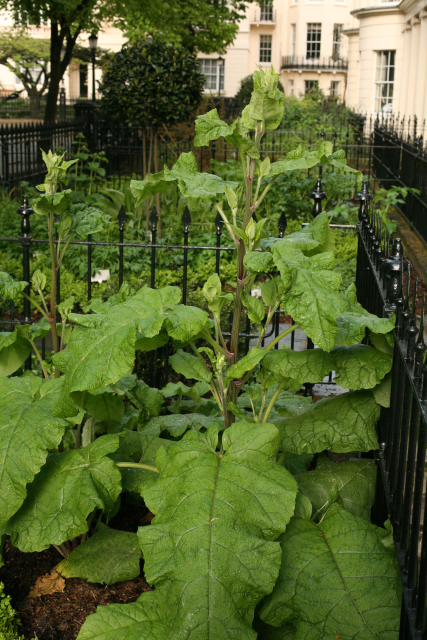
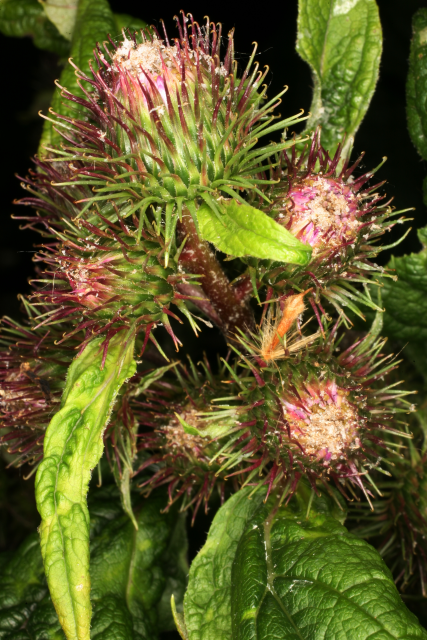
Arctium lappa L. Asteraceae. Greater burdock. Distribution: Europe to India and Japan. Dioscorides (Beck, 2003) writes: '... helps those who spit blood nd who suffer from abscesses ... plastered on it stems the pains around the joints that stem from twistings. The Leaves are applied beneficially on old ulcers.' Culpeper (1650) writes: ‘Burdanae, etc. Of Bur, Clot-Bur or Burdock, ... helps such as spit blood and matter, bruised and mixed salt and applied to the place, helpeth the bitings of mad dogs. It expels wind, easeth pains of the teeth, strengthens the back, helps the running of the reins, and the whites in women, being taken inwardly.’ The roots contain inulin, which is made into a non-digestible sweetener for diabetics. It has a multitude of uses in herbal medicine, in particular it is a component of a compound called ‘essiac’ that has been widely used as a treatment of cancers in the USA, but which is of no proven benefit. The young roots can be eaten raw or cooked. The seeds are hairy and care should be taken when harvesting them as inhaled they are reported as ‘toxic’.
Oakeley, Dr. Henry F. (2013). Wellcome Library notes. Link
Indication: to increase urine to flush urinary tract infection/minor urinary complaints. From Patient information leaflet for preparations licensed as Traditional Herbal remedies in the UK.
Medicines and Health Care Regulatory Authority, 2013 Licensed Traditional Herbal Remedies
The seeds are hairy and care should be taken when harvesting them as inhaled they are reported as ‘toxic’.
Oakeley, Dr. H. F. (2013). The Gardens of the Pharmacopoeia Londinensis.
Side effects/precautions: Hypersensitivity; do not take with diuretics; may cause anaphylactic shock, mild gastrointestinal effects. From Patient information leaflet for preparations licensed as Traditional Herbal remedies in the UK.
Medicines and Health Care Regulatory Authority, 2013 Licensed Traditional Herbal Remedies
Asia-Temperate, Caucasus, North Caucasus
Asia-Temperate, Caucasus, Transcaucasus
Asia-Temperate, China
Asia-Temperate, Western Asia, Afghanistan
Asia-Temperate, Western Asia, Cyprus
Asia-Temperate, Western Asia, Iran
Asia-Temperate, Western Asia, Iraq
Asia-Tropical, Indian Subcontinent, India
Asia-Tropical, Indian Subcontinent, Nepal
Asia-Tropical, Indian Subcontinent, Pakistan
Europe, Eastern Europe
Europe, Middle Europe
Europe, Northern Europe
Europe, Northern Europe, Great Britain
Europe, Northern Europe, Ireland
Europe, Southeastern Europe
Europe, Southwestern Europe
.JPG)