
 Back to List
Notes: Mainly used now in a tea as a tonic and restorative, it used to have much religious significance. It was called Herba sacra or sacred herb, although because it was reputed to be aphrodisiac it was also called Herba veneris. A tea made from it is still used to treat ‘liver complaints’ (Jashemski).
Jashemski, W F . (1999). A Pompeian Herbal, Ancient and Modern Medicinal Plants. University of Texas Press.
Verbena bonariensis L. Verbenaceae. Purpletop Verbena. Distribution: South America. Verbena is Latin for the shoots of Laurel; bonariensis means 'from Buenos Aires'. Verbena officinalis is licensed for use in Traditional Herbal Medicines in the UK (UK Medicines and Healthcare Products Regulatory Agency (MHRA)) in compounds with other herbs for nasal congestion, mild stress symptoms and sleeplessness.
Oakeley, Dr. Henry F. (2013). Wellcome Library notes. Link
OTHER COMMON NAMES: COMMON VERBENA; COUNTRYMAN'S TREACLE; ENCHANTER'S PLANT; HERB GRACE; HERB OF THE CROSS;HOLY HERB; HOLY PLANT; JUNO'S TEARS; MERCURY'S BLOOD; PIGEON GRASS; PIGEON'S GRASS; SETYWALL; SIMPLER'S JOY; TEARS OF ISIS; VERVAIN
The Royal Horticultural Society Horticultural Database, available at www.rhs.org.uk
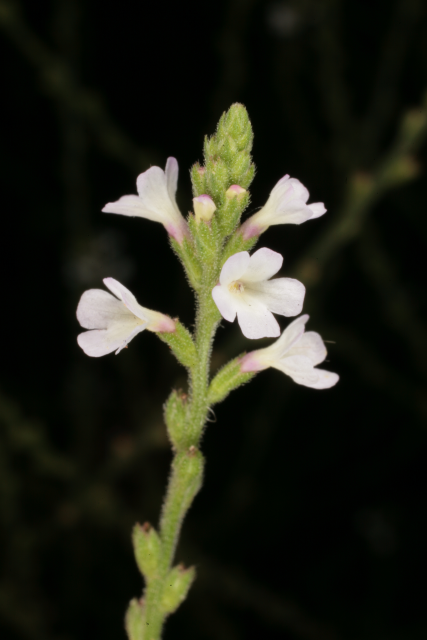
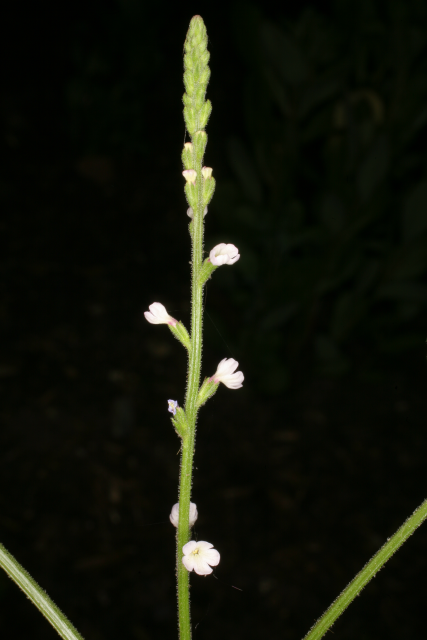
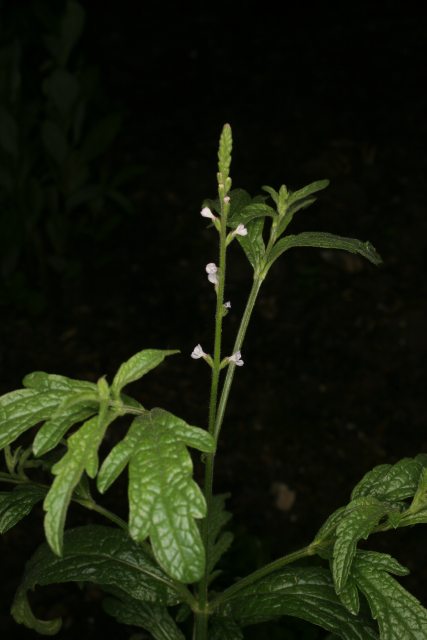
A perennial growing up to 0.6 m (2ft) high by 0.5 m (1ft 8in) wide with small, pale-lilac flowers from July to September. It has opposite leaves, and cut into toothed leaves. It’s noted for attracting bees, butterflies and moths. Grow in full sun in moderately fertile, moist but well-drained soil. The plant can tolerate strong winds but not maritime conditions. To propagate, sow seed at 18-21C in autumn. Divide this perennial in spring. Take stem-tip cuttings in late summer. Aphids, thrips and leaf hopper may be a problem, especially in dry conditions.
Brickell, C. (2003). A-Z Encyclopedia of Garden Plants. Dorling Kindersley. p.1070
Traditional Herbal Medicine Registration (THMR).
Culpeper: ‘ ... it helps the yellow jaundice, defects in the reins and bladder, pains in the head, if it be but bruised and hung about the neck; all diseases in the secret parts of men and women; made into an ointment it is a sovereign remedy for old headaches, ... it clears the skin and causes a lovely colour.’
Culpeper, Nicholas. (1650). A Physical Directory . London, Peter Cole.
Asia-Temperate, Western Asia, Turkey
Asia-Temperate, Caucasus, North Caucasus
Asia-Temperate, Caucasus, Transcaucasus
Asia-Temperate, Siberia
Asia-Temperate, Russian Far East
Asia-Temperate, China
Asia-Temperate, Eastern Asia, Japan
Europe, Northern Europe, Great Britain
Europe, Middle Europe
Europe, Northern Europe
Europe, Southeastern Europe
Europe, Southwestern Europe
Asia-Tropical
Australasia, Australia
Northern America
Southern America, Caribbean
Africa
.JPG)
.JPG)