 Back to List
Contains Elemicin, an alkenylbenzene, which is probably carcinogenic. It is genotoxic. Sassafras species contain Isosafrole, an alkenylbenzene, which is weakly hepato-carcinogenic in rats and mice. Not genotoxic. Contains myrsticin, an alkenylbenzene, which is carcinogenic and genotoxic.
van den Berg, S.J.P.L., Restani, et al., P.. (2011). Levels of Genotoxic and Carcinogenic Compounds in Plant Food Supplements and Associated Risk Assessment. Food and Nutrition Science 2: 989-1010. Link
Contains safrole (see also under toxicity) which is a natural pesticide in many plants; 2000 tons a year are used to make commercial pesticides. It is also used in the manufacture of Ecstasy. Used also in manufacture of fragrances, but no longer legally added to food or drink. (see Safrole in Wikipedia)
In traditional herbal medicine: Sassafras has a long history of herbal use. It was widely employed by many native North American Indian tribes who used it to treat a wide range of complaints, valuing it especially for its tonic effect upon the body[257].
http://www.pfaf.org, https://pfaf.org/User/plant.aspx?LatinName=Sassafras+albidum
Northern America, Eastern Canada
Northern America, North-Central U.S.A.
Northern America, Northeastern U.S.A.
Northern America, South-Central U.S.A.
Northern America, Southeastern U.S.A.
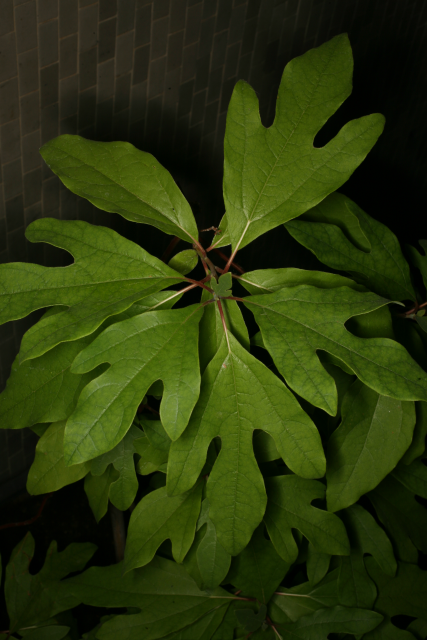
.JPG)
.JPG)
 Leaves.JPG)