
 Back to List
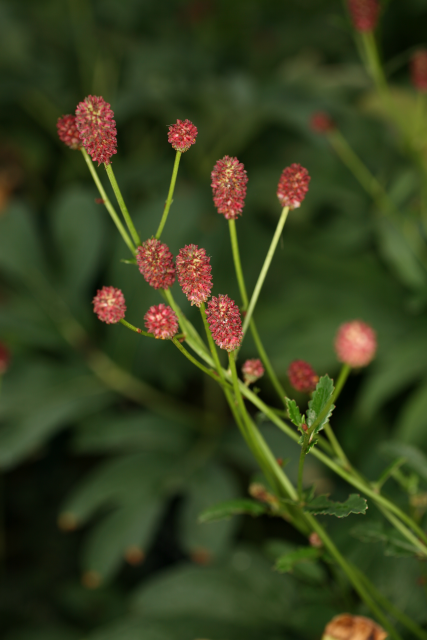
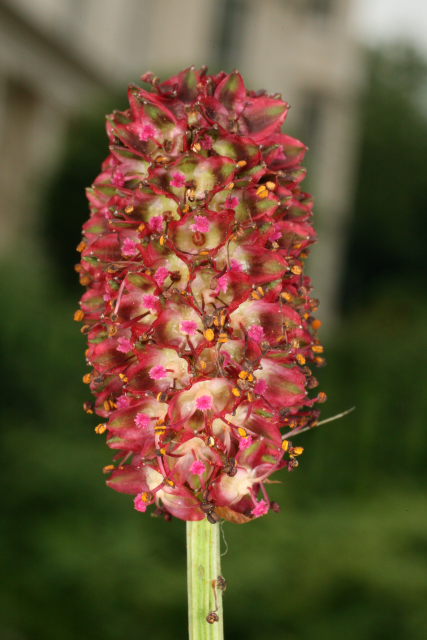
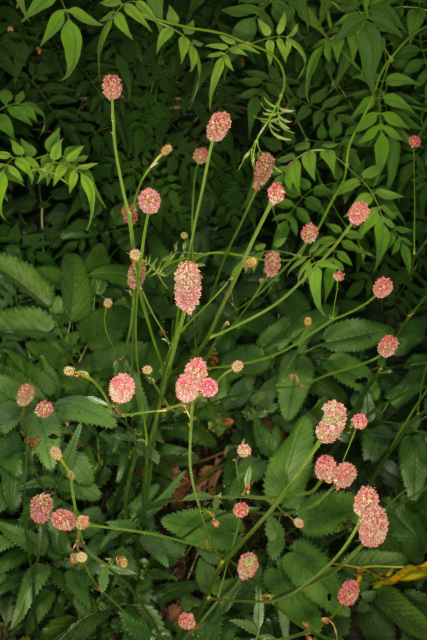
Sanguisorba officinalis L. Rosaceae Cultivar 'Tanna'. Great Burnet, Burnet Bloodwort, Pimpinella. Perennial herb. Sanguisorba is from the Latin 'to absorb blood', officinalis to indicate its long time medicinal use.
Oakeley, Dr. Henry F. (2013). Wellcome Library notes. Link
Sanguisorba officinalis L. Rosaceae. Great Burnet, Burnet Bloodwort, Pimpinella. Perennial herb. Sanguisorba is from the Latin 'to absorb blood', officinalis to indicate its long time medicinal use. Distribution: W Europe, Orient, N America. Culpeper makes no mention of it in his Physical Directory (1650), but in his English Physitian (1652) he writes at length, praising its virtues (prepared in a glass of claret) in treating diseases of the heart, driving away melancholy, treating discharges, bleeding, ulcers and preventing the plague. Parkinson (1640) calling it 'Pimpinella sive [or] Sangisorba, Burnet' concurs. Modern Chinese herbal medicine uses this in compounds for the topical treatment of third degree burns. Lyte (1578) also refers to its ability to staunch bleeding, adding that drunk with water 'in which [hot] Iron had often been quenched' works well (see Potentilla thurberi). Lyte also reports that 'some have written that its blood staunching effects are performed if 'the herbe alone being but onely holden in a mans hande ...'.
Oakeley, Dr. Henry F. (2013). Wellcome Library notes. Link
Asia-Temperate, Caucasus
Asia-Temperate, China
Asia-Temperate, Eastern Asia, Japan
Asia-Temperate, Middle Asia, Kazakhstan
Asia-Temperate, Middle Asia, Kyrgyzstan
Asia-Temperate, Russian Far East
Asia-Temperate, Siberia
Asia-Temperate, Western Asia, Iran
Asia-Temperate, Western Asia, Turkey
Europe, Eastern Europe
Europe, Middle Europe
Europe, Northern Europe
Europe, Southeastern Europe
Europe, Southwestern Europe
Northern America
 - Copy.JPG)
 - Copy.JPG)