 Back to List
Rubia tinctoria = an orthographic variant
The Royal Horticultural Society Horticultural Database, available at www.rhs.org.uk
1. Culpeper: ‘Rubiae tinctorum. Of Maddir. In this were Galen and Dioscorides quite beside the cushion [= an ancient expression, apparently coined by Judge Jeffreys, meaning ‘not to the point’] in saying this root was cleansing and opening when clean contrary it is both drying and binding, yet not without some opening quality for it helps the yellow jaundice and therefore opens the obstructions of the Liver and Gall;
Culpeper, Nicholas. (1650). A Physical Directory . London, Peter Cole.
2) Culpeper: "it is given with good success to such as have bruises by falls, stops the Looseness, the Haemorrhoids, and the Terms in women.’
Culpeper, Nicholas. (1650). A Physical Directory . London, Peter Cole.
‘The root is thin, long, diuretical... it helps ye Ictericall [=jaundice] and ye Ischiaticall and ye Paralyticall: it drives out much and thick urine and sometimes also blood ...’
gunther
Contains Lucidin is 1,2,3-hydroxy anthraquinone, which is genotoxic and probably carcinogenic.
van den Berg, S.J.P.L., Restani, et al., P.. (2011). Levels of Genotoxic and Carcinogenic Compounds in Plant Food Supplements and Associated Risk Assessment. Food and Nutrition Science 2: 989-1010. Link
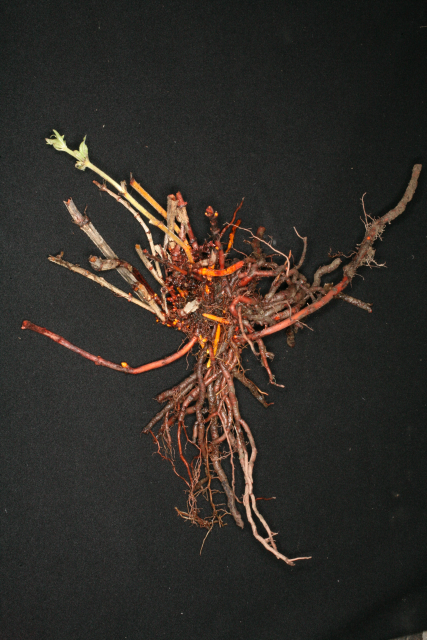
Roots used to produce a red dye that was used to colour the uniforms of ther British Army - hence 'red coats'. It is ahighly conjugated anthraquinone molecule called alizarin. It had to be used with mordants as it is not particularly colourfast. Artificial anthraquinone dyes similar to alizarin are made and used in inks.
Sequin, M. (2012). The Chemistry of Plants. Perfumes Pigments and Poisons. Royal Society of Chemistry, Cambridge, UK. page 172-3
Africa, Northern Africa, Algeria
Africa, Northern Africa, Libya
Africa, Northern Africa, Tunisia
Asia-Temperate, Caucasus
Asia-Temperate, Middle Asia, Tadzhikistan
Asia-Temperate, Middle Asia, Turkmenistan
Asia-Temperate, Middle Asia, Uzbekistan
Asia-Temperate, Western Asia, Cyprus
Asia-Temperate, Western Asia, Iran
Asia-Temperate, Western Asia, Iraq
Asia-Temperate, Western Asia, Jordan
Asia-Temperate, Western Asia, Lebanon-Syria
Asia-Temperate, Western Asia, Turkey