 Back to List
Syn. = Rosa mundi; Rosa mundi 'Versicolor'; Rosa versicolor; Rosa 'Mundi'
named for Rosamund Clifford the mistress of Henry II ...
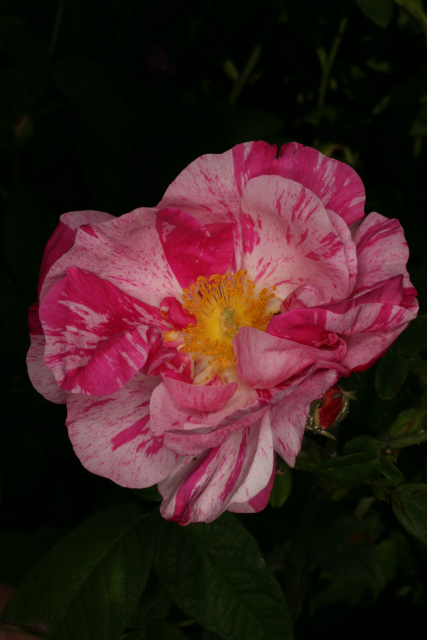
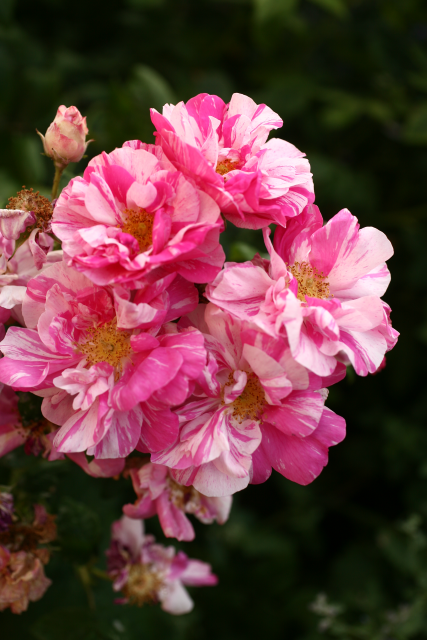
The variegation of Rosa mundi is due to transposons, small chains of genetic material that jump in and out of locations within the genome, interfering with the expression of the gene for pink colour within the flower.
Oakeley, Dr. H. F. . (2013). The Gardens of the Pharmacopoeia Londinensis. Link
The variegation of the petals is due to transposons 'jumping genes' which cause temporary breaks in the allele that causes the pink colour of the flowers.
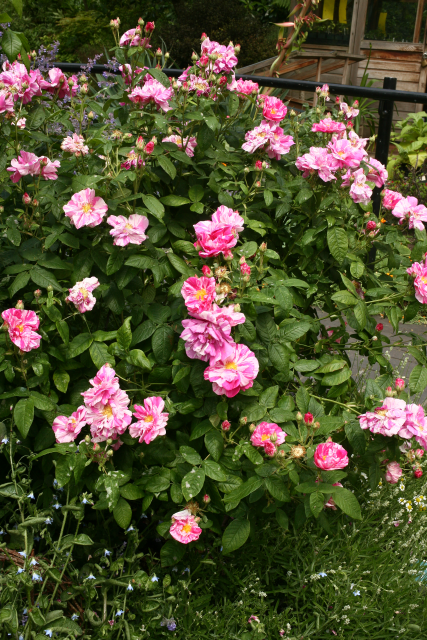
Rosa gallica ‘Versicolor’ is pink, irregularly striped with white, and known as Rosa mundi, purportedly named after “the beautiful Rosamund Clifford, who spent her days (and most probably nights) entertaining the already-wed Henry II”.
Oakeley, Dr. Henry F. (2014). Conium maculatum, Hemlock, Cicuta, Conio. Link
Culpeper (1653): “Red roses cool, bind, strengthen both vital and animal virtue, restores such as are in consumptions, strengthen. "
Culpeper, Nicholas. (1653). The London Dispensatory.
.JPG)