
 Back to previous page
Featured Plant
Humulus lupulus
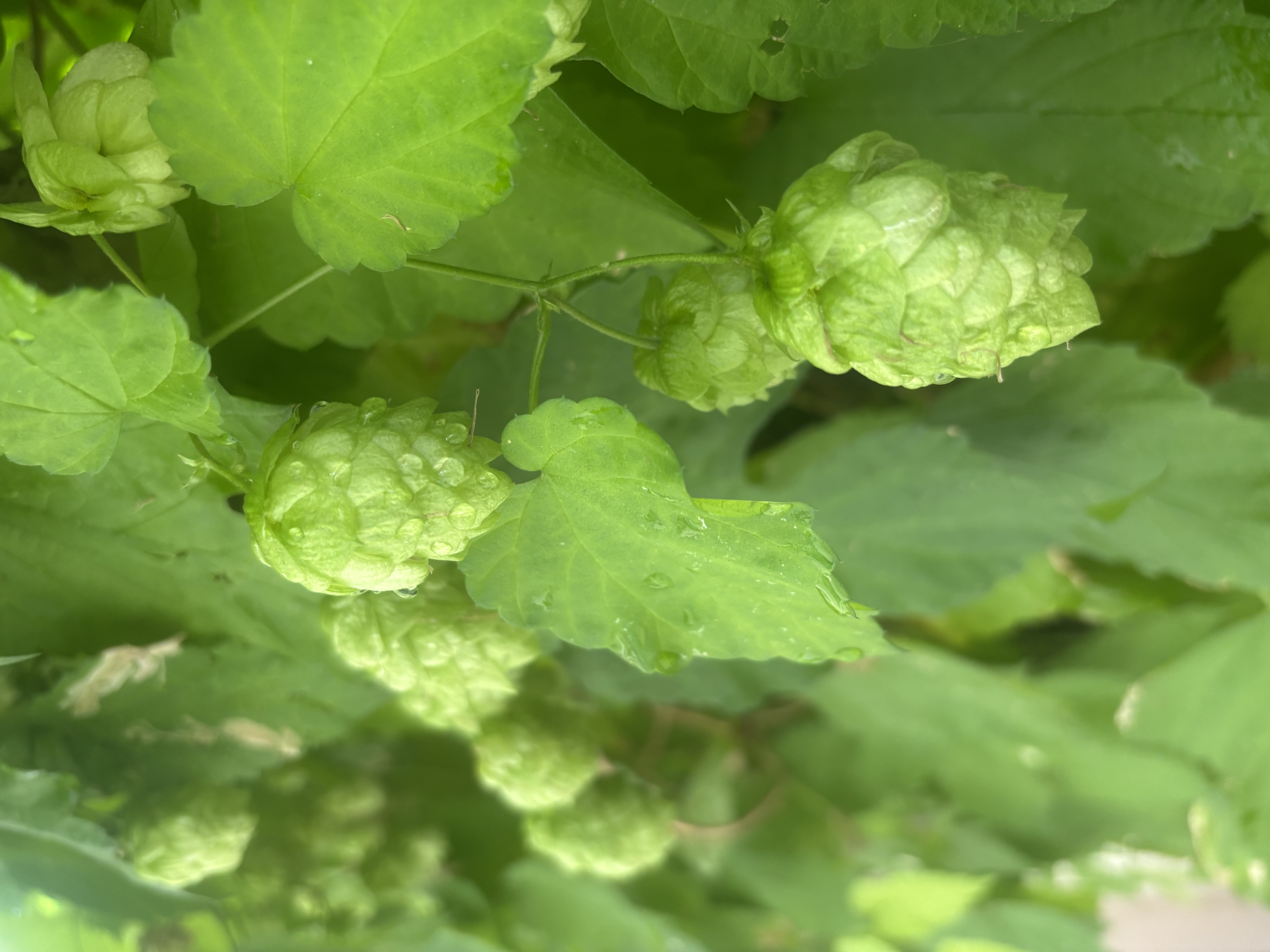
The name of the hop plant is derived from the Anglo-Saxon word hoppen, meaning “to climb”. The Latin name Humulus lupulus (with lupulus meaning “small wolf”) reflects its vigorous, untamed growth, for this hardy perennial can grow to 15 metres in height in a single summer, twining itself around trees for support.
The young shoots were once eaten like asparagus but it is the female flower heads, the ’hop’ or cone-shaped 'strobiles' that are the most prized (in a similar way to those of the cannabis plant, to which the hop is closely related). These strobiles contain glands that secrete a variety of essential oils, including potent bactericides. They were gathered in early monastic physic gardens for medicinal use and modern studies confirm their ability to relieve symptoms of anxiety and insomnia.
The introduction of hops into brewing was first recorded by Benedictine monks in 9th century France and this transformed the production of ale. Medieval ale, a sweet and short-lived drink made from malted barley, acquired a longer shelf life and a pleasing bitterness when hops were added, for they acted as a useful preservative. This new commodity, which we know as 'beer', could be traded, and monasteries became profitable breweries. By the fifteenth century, hopped beer had become established across Europe, including in England.
Hopping provided an important seasonal activity for city dwellers and families from the east end of London would famously spend their summers working in Kent until mechanisation finally brought this to an end in the 1960’s.
From the 18th century onwards, hops were cultivated in tall plantations, or hopyards, their climbing stems supported by poles and wires more than five metres high and men on stilts would take part in the seasonal hop-picking.
Today, there are many dozens of varieties of hops, each giving a distinct flavour and aroma to beer. The United States is now the largest producer, while Germany continues to grow traditional, lower-yielding types. This diversity of cultivation sustains the huge range of beers enjoyed around the world.